
The creation of digital innovations has opened up many opportunities to be creative. Intellectual property rights need special attention. Digitalization has made them easier to misuse. Blockchain technology can help solve challenges in protecting and managing valuable resources.
Blockchain produces transparent and permanent records. This makes easier verification of ownership, managing licensing rights, and better IP administration. Many companies seek blockchain to protect intellectual property. It has obvious benefits. Legal institutions are establishing regulations in this area, so blockchain patents matter. For a look at how governments are handling AI and IP rules, see our coverage of Japan AI regulation news.
This guide explains how blockchain relates to intellectual property. It examines its impact on patents and addresses other related questions.
What is the use of blockchain in intellectual property?
It means using this technology to document, manage, and protect intellectual property rights. With this technology, you can establish a clear property right. You won’t need paper documents or central databases.
With blockchain technology, you can create a digital record that the network can’t erase or alter. So, blockchain is great for proving authorship. This is especially true when applying for patents and trademarks.
In the realm of intellectual property, technology allows for several key activities.
This includes:
- Creating proof of creation
- Verifying ownership rights
- Transferring intellectual property
- Keeping records of these transactions
Understanding Intellectual Property Rights
Intellectual Property (IP) covers all works protected by law. This includes inventions, trademarks, designs, and digital content. You can group intellectual property rights into copyrights, trademarks, patents, and trade secrets.
When we talk about blockchain and intellectual property, things get more complex. Digital content can be easily shared or copied on worldwide platforms.
How Blockchain in Intellectual Property Protection Works
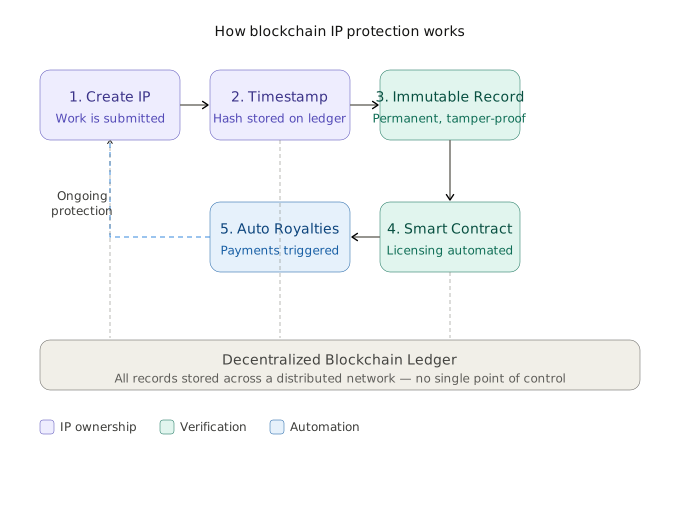
It tracks IP ownership and usage on a decentralized ledger. A blockchain can store a designer’s or inventor’s work. This includes the exact time of creation, offering clear proof of its origin.
One of the main elements of this technology is the use of smart contracts. Smart contracts activate automatically when specific criteria are met. In other words, this agreement does not require a third party to enforce or carry out any of its terms.
Blockchain vs Traditional Intellectual Property Systems
Blockchain won’t replace existing intellectual property systems. However, it can solve some issues in traditional IP management. The table below highlights some of the key differences between the two approaches.
| Feature | Traditional IP Systems | Blockchain-Based IP Systems |
| Ownership Records | Stored in centralized databases and official registries | Stored on decentralized and tamper-resistant ledgers |
| Proof of Creation | Often relies on documentation and legal filings | Uses immutable timestamps to verify creation dates |
| Transparency | Information may be fragmented across multiple systems | Transactions and ownership history can be tracked more easily |
| Verification Process | Can require manual review and third-party validation | Verification is automated through blockchain records |
| Licensing Management | Often involves paperwork and intermediaries | Smart contracts can automate licensing terms |
| Royalty Distribution | May require multiple parties and processing delays | Automated payments can be triggered through smart contracts |
| Fraud Prevention | Vulnerable to document manipulation and record inconsistencies | Blockchain records are difficult to alter or falsify |
| Global Accessibility | Depends on jurisdiction and local registries | Accessible across decentralized networks worldwide |
| Enforcement | Governed by existing legal frameworks | Still depends on legal recognition and regulatory compliance |
| Adoption Level | Widely established and legally recognized | Growing adoption but still evolving in many jurisdictions |
Blockchain brings benefits like transparency, automation, and secure records. Traditional intellectual property systems remain key to legal registration, enforcement, and dispute resolution. Many experts see blockchain as a helpful tool for protecting intellectual property. They believe it should support, not replace, current IP systems.
Key Benefits of Blockchain Intellectual Property Protection
Proof of Ownership and Creation
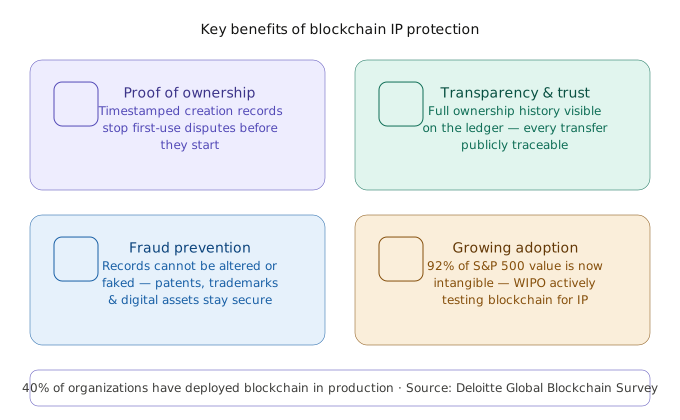
The best part of using blockchain for intellectual property is that it clearly shows who owns it. It stops fights over who had an idea first. It also makes it easier to show if someone is copying or using something without permission.
Transparency and Trust in IP Transactions
Blockchain also makes intellectual property systems more open and honest. When someone buys or sells, they note it in a ledger. This makes it easy to track past ownership. This is very useful in industries that license assets. It clears up confusion and builds trust for everyone in blockchain and IP law.
Fraud Prevention and IP Security
Blockchain also prevents people from misrepresenting ownership or using others’ ideas. Companies can use blockchain to track their patents, trademarks, and digital assets. This makes it harder for others to fake or claim what isn’t theirs.
Growing Relevance in Modern IP Systems
Blockchain is now a key tool for managing intellectual property rights. More businesses are using digital assets, so their importance is growing. Many companies use blockchain to record data, verify identities, and track assets. Blockchain and intellectual property law are starting to collaborate with governments and companies. This aims to make intellectual property systems more secure and transparent.
Blockchain and IP Law

Blockchain technology is expanding in the realm of intellectual property. However, legal frameworks around the world are struggling to keep pace. Blockchain provides strong tools for proving ownership and transactions.
However, it does not guarantee that anyone will regard the data on it as legally valid evidence in any IP case. Multinational corporations will face jurisdictional uncertainty. This is because the legal community does not agree on the validity of blockchain data.
Jurisdiction is another issue to consider due to the decentralization of blockchain networks. The challenge is figuring out the right laws when a dispute comes up. This is tricky because blockchain in intellectual property protection can involve several countries.
Institutional Support and Growing Adoption
Can blockchain transform how we protect ideas? Big regulatory bodies hold that belief. The World Intellectual Property Organization (WIPO) set up a Blockchain Task Force within its standards committee. Their goal? Explore how distributed ledger technology can improve IP registration, confirm true ownership, and allow easy data sharing. WIPO’s recent research shows that blockchain provides great transparency.
It also offers strong security and smooth interoperability for today’s IP systems. Why the sudden rush toward blockchain? Look at the numbers. Ocean Tomo’s 2025 Intangible Asset Market Value Study revealed a big surprise. Intangible assets now make up 92% of the market value for S&P 500 companies. Compare that to 17% back in 1975. Patents, trademarks, copyrights, and proprietary data are now worth trillions. Organizations are seeking smarter ways to secure themselves, completely changing the game.
This isn’t theory anymore; enterprise adoption of blockchain technology is also accelerating. Deloitte’s Global Blockchain Survey shows that about 40% of organizations have deployed blockchain solutions in production. A vast majority of business leaders expect blockchain to have a significant influence on their future corporate strategies. Blockchain protects inventions. It keeps records safe from tampering. It also verifies identity and manages digital assets. As with AI, success depends on governance as much as technology, a point explored in why AI transformation is a problem of governance.
Blockchain Patent and Trademark Issues
There are legal issues in blockchain development related to trademark and patent protection. One element is overlapping innovation. This may occur when many blockchain innovations happen at the same time. Thus, it is difficult to identify the owner and claim originality.
Trademarks matter in blockchain, too. This is key with the growth of Web3 platforms and NFTs. One example is how brands can be vulnerable in a blockchain setting. Others can copy their assets, such as names and logos, with little effort. We need to protect trademarks and other intellectual property linked to blockchain technology.
Another example related to trademarks is enforcing them across borders. Blockchain spans borders, so a trademark breach can occur in many places at the same time. So, it’s important to look at how blockchain connects with IP law.
Blockchain Tools Used for Intellectual Property Protection
As blockchain IP protection grows in popularity, several platforms have emerged. These platforms help manage ownership details, licensing, and asset authentication. Each platform serves different purposes. Still, they all use blockchain technology to operate.
Blockai
The Blockai project helps creatives verify ownership of their digital assets. This platform allows users to register their creative content on the blockchain. This creates a timestamp that proves authorship. This tool is perfect for writers, photographers, graphic designers, and content creators. It helps them determine when they created their intellectual property.
Verisart
Verisart has become an industry leader in art and collectibles. It offers blockchain-secured certificates of authentication for artists, galleries, and collectors. This service lets you create tamper-proof records. This reduces fraud and boosts confidence among buyers of digital and real-world assets.
Bernstein
This project helps companies and scientists protect their ideas and inventions. This app lets users store patents and inventions. It also holds trade secrets, study papers, and other private data. All of this is saved in a digital format. The blockchain keeps these records safe. In the event of an IP dispute between companies, this kind of answer could be very useful.
Everledger
Everledger stands out from many IP-focused platforms. It tracks high-value assets throughout their entire lifecycle. The platform was first made for the diamond industry. It uses blockchain technology to create a clear record. This helps stop fraud and counterfeiting. This example shows how blockchain protects IP. It also supports ownership and helps fight counterfeiting.
Ascribe
Ascribe is a pioneer in blockchain technology. It’s a platform where digital artists can register their work. This helps them control ownership and licensing. Ascribe is still an important example, even with many changes in the blockchain space.
Challenges and Limitations of Blockchain in Intellectual Property Protection
There are several drawbacks to using blockchain technology to protect intellectual property rights. First of all, there is no clear legal acceptance of blockchains by many nations. There are still a lot of countries that haven’t decided if blockchain records can be used as proof in intellectual property cases.
Moreover, the scalability of blockchain technology presents certain problems. Blockchains provide strong security for users. Adding them to existing intellectual property systems can be hard and costly for many businesses.
When it comes to blockchain technology, there are also some scientific and legal things to keep in mind. IP management may take longer because of privacy concerns and the need to handle different technologies and rules.
The Future of Blockchain in Intellectual Property
In the next few years, blockchain could change how industries manage intellectual property rights. Better connections will form between blockchain platforms and IP databases. This will make it easier to register, verify, and protect intellectual property rights.
Artificial intelligence may further accelerate this transformation. Businesses are already using AI to detect copyright infringement and analyze patent databases. AI tools could help automate the monitoring and protection of intellectual property assets. And, blockchain provides a secure and verifiable record of ownership and transactions.
Blockchain in intellectual property is finally gaining attention in legislation. This suggests seeing improved frameworks for blockchain and IP in the years ahead. With regulations set, more companies will feel safe using blockchain to manage their patents, trademarks, and other IP.
Conclusion
Digital innovation is moving fast, so we need a better way to protect intellectual property. Blockchain technology can help with many challenges in copyright, trademark and patent law. It also helps prove ownership of intellectual property.
Blockchain keeps a record of events, helping people trust deals more. However, it can’t solve all the issues related to securing intellectual property. This approach works because it sticks to existing rules and tackles new blockchain issues. Some organizations, such as WIPO, are testing blockchain. This aims to enhance their management of intellectual property rights.
So there are still problems with applying blockchain in intellectual property protection. But the work is not done yet. Companies that adopt blockchain today are more likely to prosper in the future.
Frequently Asked Questions (FAQs)
What Is Blockchain in Intellectual Property?
In intellectual property, blockchain helps track ownership and usage rights. This applies to creative, innovative, and brand assets through secure, timestamped electronic data.
How does blockchain help in intellectual property protection?
To protect intellectual property with blockchain, record who owns and uses each IP resource. No one can alter these records. This helps show that the team made the work and can cut down on IP conflicts.
What are Blockchain Patents?
Blockchain patents protect innovations in blockchain technology. This includes inventions for smart contract platforms and software applications.
What are the main blockchain and IP law challenges?
Some big challenges in legal matters about blockchain and intellectual property are:
Recognizing blockchain data legally
Dealing with jurisdictional issues
What are common blockchain patent and trademark issues?
Blockchain patents and trademarks face many issues. This is due to copyright violations on Web3 platforms. There are also overlapping problems with innovation and originality. Problems with NFT trademarking add to these concerns.
Is blockchain replacing traditional intellectual property systems?
No, blockchain is a tool. It improves how we manage and protect intellectual property rights compared to before.

Comments are closed