DenebrixAI is a generative AI development company that designs, builds and deploys custom GenAI solutions for startups, mid-size firms and enterprises in the USA and worldwide. We turn large language models, retrieval-augmented generation and AI agents into secure applications that work on your own data.
One senior team owns strategy, model selection, integration and LLMOps, so your generative AI solutions ship with measurable accuracy, predictable token cost and audit-ready logs.
Your data and documents flow through retrieval, guardrails and evaluation before any customer sees an answer.

From the first proof of concept to an enterprise generative AI rollout, our genai development services cover consulting, model development, integration and long-term support.
Use-case discovery, data readiness checks and ROI modeling show where GenAI pays off before you commit a large budget.
Generative AI app development on GPT, Claude, Gemini or Llama, with structured outputs, tool calling and clean APIs for your product.
Knowledge assistants search your documents through vector embeddings and hybrid retrieval, then answer with grounded citations.
Generative AI model development with LoRA, PEFT, distillation and RLHF adapts foundation models to your domain, tone and accuracy targets.
Agentic AI plans steps, calls tools through Model Context Protocol and completes multi-step tasks with human review gates.
Customer and employee chatbots understand context, hand complex cases to people and stay inside your brand rules.
Solutions that work across text, image and voice, using diffusion models, Whisper speech-to-text and vision-language models.
We connect GenAI to Salesforce, SharePoint, ERP and CRM systems through secure APIs, so it works inside the tools your team already uses.
Continuous evaluation, monitoring, model upgrades and cost tracking keep accuracy high long after launch.
Adoption is no longer the hard part. The Stanford AI Index 2025 reports that 78% of organizations used AI in 2024, yet many GenAI pilots still stall. Gartner predicted that at least 30% of generative AI projects would be abandoned after proof of concept by the end of 2025. The main causes it named were poor data quality, weak risk controls, rising costs and unclear business value.
We design against those causes from day one. Every build ships with a golden test set, hallucination control, guardrails and cost tracking, so you can check accuracy and token spend before any customer sees an answer.
Golden test setsHallucination controlGuardrailsToken cost tracking
Answers backed by your own sources.
Scored against a golden test set.
Fast replies for live users.
Token spend tracked per feature.
Generative AI touches sensitive data, so governance cannot wait until the final audit. Our delivery follows the NIST AI Risk Management Framework and aligns with ISO/IEC 42001, with role-based access, PII masking, prompt-injection testing and audit-ready logs in every build.
We design for HIPAA, GDPR, CCPA, SOC 2 and the EU AI Act where they apply. When data must stay in-house, we deploy a private LLM inside your own cloud under strict data residency rules.
NIST AI RMFISO 42001 alignedHIPAA & GDPRSOC 2 ready
A clear generative AI implementation process with weekly demos, fixed checkpoints and evaluation at every stage. Most focused first releases reach production in under 16 weeks.
We map workflows, data sources and risks, then score each use case by business value, feasibility and data readiness.
A working PoC in two to four weeks tests the riskiest assumption with real data and one clear success metric.
We compare foundation models on accuracy, latency, cost and privacy, then design the prompt layer, retrieval pipeline and guardrails.
Engineers build the application, RAG pipeline and tool calling in agile sprints, then connect everything to your existing systems.
Golden datasets, LLM-as-judge scoring and prompt-injection tests confirm output quality before launch, with human review where it matters.
We deploy on Azure, AWS or Google Cloud with monitoring, cost alerts, model upgrades and continuous evaluation.
Talk to our generative AI engineers about your use case. We will review your data, suggest the right model and architecture, then send a scoped estimate with no obligation.
Practical GenAI applications that save hours, lower costs and improve customer experience across your organization.
Extract, classify and summarize contracts, claims and invoices.
Answers from your wikis and files, with citations.
Assistants that draft, analyze and act inside daily tools.
Resolve routine questions and route complex cases.
On-brand copy, product descriptions and reports.
Code review, test writing and legacy code explanation.
Turn data and dashboards into plain-language summaries.
Text-to-image visuals with Stable Diffusion or DALL-E.
Transcription, call summaries and voice assistants.
Tailored emails, offers and proposals for each buyer.
Senior AI engineers, honest advice and generative AI services you fully own.
We choose between OpenAI, Anthropic Claude, Google Gemini, Meta Llama and Mistral based on your accuracy, cost and privacy needs, without vendor lock-in.
Every release ships with an evaluation suite, so accuracy, groundedness and latency become tracked numbers instead of promises.
Caching, model routing and smaller open-source models keep inference spend predictable as usage grows.
Source code, prompts, fine-tuned weights and evaluation data belong to you, with full documentation and knowledge transfer.
Leading foundation models, orchestration frameworks and vector databases, chosen for accuracy, security and cost.
Every industry has its own data, rules and risks. Pick yours to see the problem we usually solve, what we build and how we measure results.
Clinicians spend hours on documentation, while any tool that touches patient records must meet HIPAA rules.
Clinical note summarization, EHR-connected assistants, patient message drafts and prior authorization support with human review.
Charting time, patient response time, documentation errors and audit results.
Clinical Notes AIEHR AssistantPatient Messaging
Analysts dig through filings, policies and client records by hand, while regulators expect a clear audit trail.
Research copilots, risk report summaries, compliance checks, client advice drafts and fraud investigation assistants.
Research hours saved, report turnaround, compliance findings and client response time.
Research CopilotRisk SummariesCompliance Assistant
Claims and underwriting teams review long forms, photos and emails, which slows decisions and frustrates policyholders.
Claims document processing, underwriting summaries, policy Q&A assistants and first notice of loss intake.
Claims cycle time, cost per claim, underwriting throughput and customer satisfaction.
Claims AutomationUnderwriting CopilotPolicy Q&A
Writing product content and personalizing offers for thousands of SKUs is slow, so many products go live with thin descriptions.
Product description generation, shopping assistants, personalized offers, review summaries and demand insight reports.
Conversion rate, content production time, average order value and support tickets.
Product Content AIShopping AssistantPersonalization
Maintenance histories, manuals and sensor logs sit in separate systems, so technicians lose time hunting for answers.
Maintenance copilots, root-cause summaries from sensor data, SOP generation and quality report drafting.
Downtime, mean time to repair, scrap rate and technician onboarding time.
Maintenance CopilotSOP GeneratorQuality Reports
Planners juggle supplier emails, shipment data and spreadsheets, so disruptions often surface too late.
Supplier summaries, plain-language exception alerts, scenario planning assistants and freight document processing.
On-time delivery, planner hours saved, inventory accuracy and exception response time.
Supplier InsightsException AssistantFreight Docs AI
Lawyers spend hours on contract review and research, while every answer must point back to a trusted source.
Contract review and clause extraction, research assistants with grounded citations and first-draft generation.
Review hours, turnaround time, missed clause risk and outside counsel spend.
Contract ReviewLegal Research AIClause Extraction
Leases, listings and tenant requests live in different tools, which slows responses and deal analysis.
Listing description generation, lease abstraction, tenant support assistants and investment memo drafts.
Response time, lease review hours, listing time to market and renewal rate.
Lease AbstractionListing Content AITenant Assistant
Instructors cannot give every learner one-to-one help, and building new course content takes weeks.
AI tutors grounded in course material, quiz and lesson generation, feedback drafts and admin assistants that respect FERPA.
Course completion, content creation time, instructor hours saved and learner satisfaction.
AI TutorCourse Content AIGrading Assistant
Choose the model that fits your scope, budget and in-house skills. Each one starts with a clear written proposal.
A fixed-scope PoC in two to four weeks that tests one use case with your data and a clear success metric.
AI engineers, data scientists, QA and a project manager who work as an extension of your company on a monthly plan.
Add senior LLM, RAG or MLOps engineers to your in-house team to close skill gaps and speed up delivery.
A look at AI products and intelligent platforms our team has built for real clients.
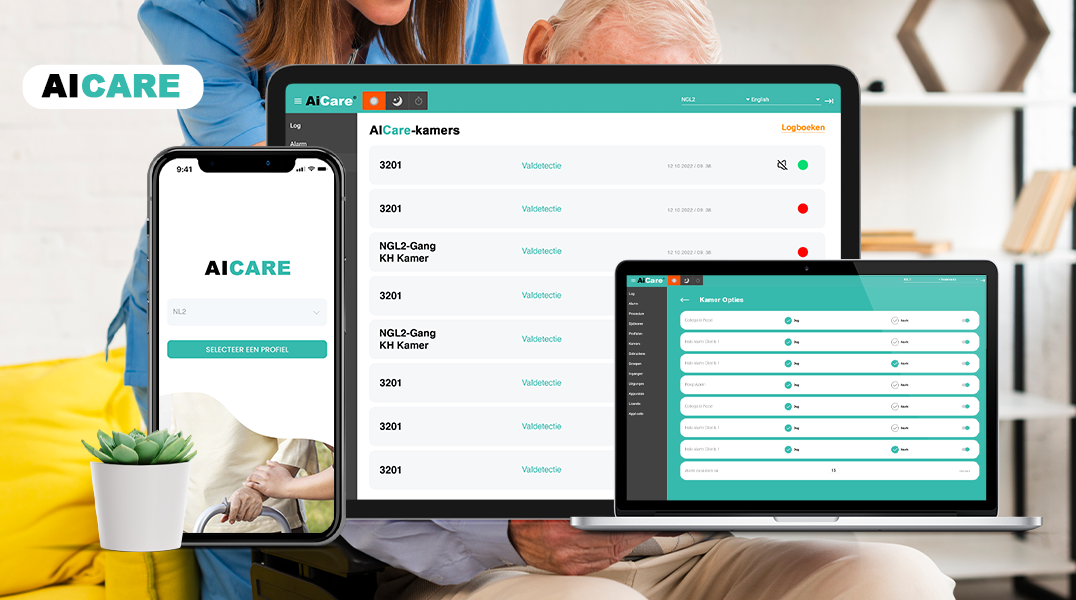
An AI clinical-support system that streamlines documentation and decision-making across care teams.
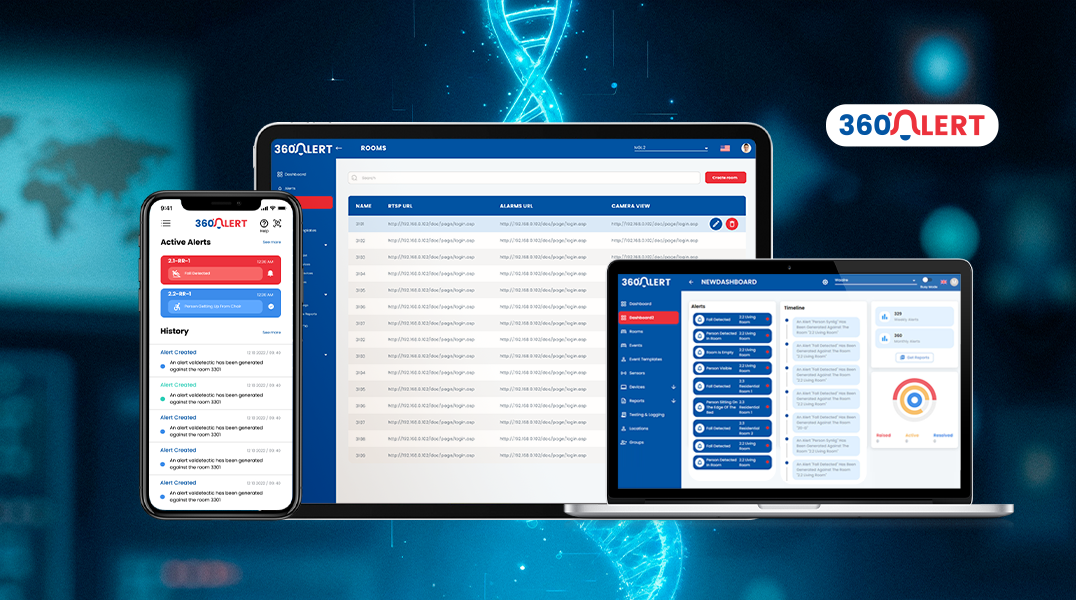
A real-time monitoring platform that detects anomalies and escalates critical events the moment they happen.
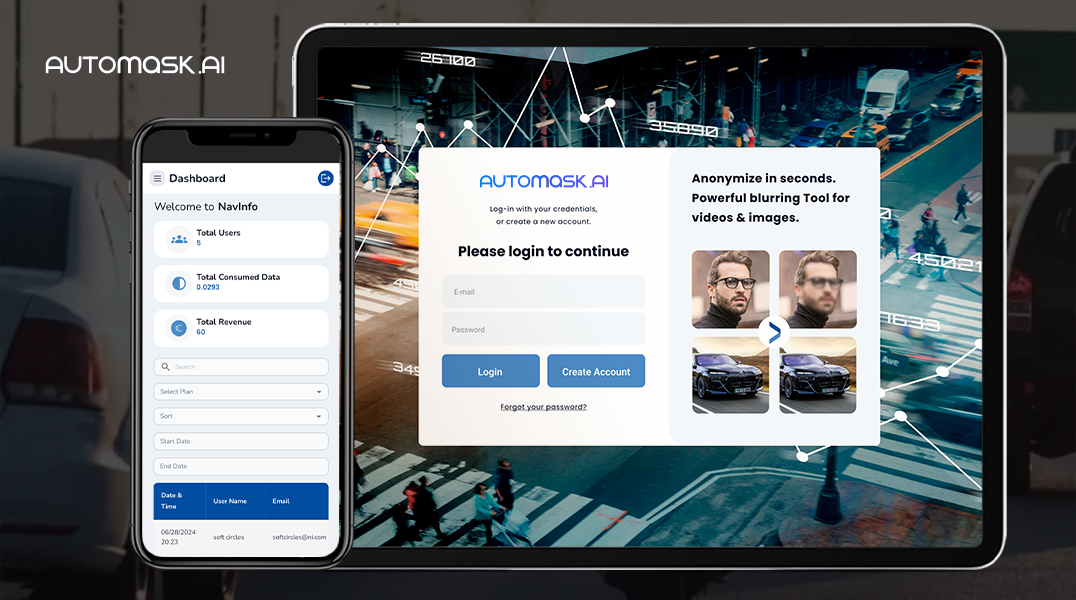
A computer-vision tool that automates image masking at scale, cutting manual editing time for creative teams.
Generative AI development services cover the strategy, design, engineering and support needed to build software that creates text, images, code or audio. A typical engagement includes use-case discovery, model selection, RAG or fine-tuning, system integration, evaluation and ongoing LLMOps.
Cost depends on the use case, data readiness, integrations and compliance needs. A focused proof of concept costs far less than an enterprise platform with many users and integrations. We share a scoped estimate after a free discovery call, with fixed-price and time and material options.
A proof of concept usually takes two to four weeks. Most focused first releases reach production in 8 to 16 weeks, while larger enterprise rollouts are delivered in phases over several months.
We ground answers in your approved content with retrieval-augmented generation, then use guardrails and structured outputs to limit what the model can do. Before launch, responses are scored against a golden test set. In production, we monitor accuracy and route uncertain answers to a person.
RAG is usually the best first step when answers depend on documents that change often, since it keeps sources current and citable. Fine-tuning helps when you need a specific tone, format or domain skill. Many production systems combine both.
Yes. We connect GenAI to CRM, ERP, SharePoint, data warehouses and custom apps through secure APIs, tool calling and Model Context Protocol servers. That way, the solution works inside the tools your team already uses.
No. Your data is used only for your project. We work with enterprise services such as Azure OpenAI Service and Amazon Bedrock, which do not train on customer data. For stricter needs, we deploy open-source models like Llama inside your private cloud.
Generative AI creates new content such as text, images or code. Agentic AI goes further, since it can plan steps, call tools and complete tasks across your systems. Our guide on agentic AI vs generative AI explains when to use each one.
Tell us about your use case, data and current systems. Our gen AI development company will recommend the right model, architecture and roadmap, so your first release delivers measurable business value.