DenebrixAI is an AI agent development company that designs, builds and deploys custom AI agents for startups, mid-size firms and enterprises in the USA and worldwide. Our agents plan tasks, call tools and work across your CRM, ERP and ITSM systems with full action traceability.
One senior team owns strategy, agent architecture, integration and AgentOps, so every agent ships with guardrails, approval gates on risky actions and measurable task completion.
Each request is planned, executed through approved tools and checked against your rules before anything changes in your systems.



Our AI agent services cover strategy, design, integration and long-term support, so enterprise AI agents move from pilot to production without surprises.
AI agent consulting services that map your workflows, score use cases and estimate ROI before you build anything.
Custom agentic AI development services for domain-specific agents with planning, memory and tool calling, built around one clear outcome.
Planner, worker and reviewer agents split complex tasks and collaborate through shared agent memory and the A2A protocol.
Agents act inside Salesforce, SAP, ITSM tools and custom apps through secure APIs and Model Context Protocol servers.
RAG-powered agents retrieve facts from your documents and knowledge graphs, then act with grounded citations.
Customer service and IT helpdesk agents resolve requests across chat, voice and email, with smooth handoff to people.
We fine-tune LLMs or use small language models when an agent needs domain skill, lower cost or faster responses.
Agents run on your own infrastructure or inside a private cloud, using self-hosted models such as Meta Llama or Mistral.
Tracing, evaluation and cost tracking show every step an agent takes, so issues get fixed before users notice.
Many agent pilots look impressive in a demo, then stall. Gartner predicts that over 40% of agentic AI projects will be canceled by the end of 2027. The reasons it names are escalating costs, unclear business value and inadequate risk controls.
We prove value before scaling to production. Every agent ships with an evaluation suite that tracks task completion, tool-call accuracy, escalation rate and cost per task, so decisions rest on numbers instead of demos.
Task completion rateTool-call accuracyCost per taskGraceful fallbacks
Jobs finished without human rework.
The right tool with the right inputs.
Hard cases routed to people.
Token and API spend per outcome.
An agent that can act can also make mistakes at scale. We design against the risks in the OWASP Top 10 for LLM Applications, such as prompt injection and excessive agency. Least-privilege tool access, OAuth 2.1 scopes and sandboxed execution keep each agent inside its limits.
Risky actions like payments, deletions or outbound emails pass through human approval gates. Our governance follows the NIST AI Risk Management Framework and aligns with ISO/IEC 42001. Detailed audit trails support HIPAA, GDPR, SOC 2 and the EU AI Act.
Least-privilege accessApproval gatesAudit trailsNIST AI RMF
A clear agent development lifecycle with weekly demos and evaluation at every stage. Most focused agents reach production in four to eight weeks after a successful PoC.
We map the process, systems and decision points, then pick tasks where an agent can deliver measurable ROI.
A proof of concept tests one workflow with real data, real tools and a clear success metric before any big spend.
We design the planning module, memory, tool layer and guardrails, then choose LLMs or SLMs by accuracy, latency and cost.
Engineers build with LangGraph, CrewAI or vendor SDKs, then connect tools through MCP servers and secure APIs.
Golden task sets, tool-call checks and prompt-injection tests confirm reliable tool use before launch.
We deploy on AWS, Azure or Google Cloud with tracing, alerts, cost tracking and continuous evaluation.
Talk to our AI agent engineers. We will map the process, suggest the right agent design, then send a scoped estimate with no obligation.
Workflow automation agents, decision-making agents and conversational agents that take repetitive work off your team.
Resolve tickets, track orders and process refunds.
Reset access, triage incidents and update tickets.
Qualify leads, update the CRM and draft follow-ups.
Match invoices, flag exceptions and close faster.
Screen candidates, onboard hires and answer policy questions.
Review alerts and support KYC and AML checks.
Read contracts and claims, then extract key terms.
Track shipments, reorder stock and alert planners.
Gather sources and write cited summaries.
Write tests, review pull requests and fix bugs.
Senior engineers, open protocols and AI agent development solutions you fully own.
We work with OpenAI, Anthropic Claude, Google Gemini and Meta Llama through open protocols like MCP and A2A, so you avoid vendor lock-in.
Approval gates, confidence thresholds and clear escalation paths keep people in control of high-impact decisions.
Every plan, tool call and result is logged, so you can audit what an agent did and why it did it.
You own the code, prompts and evaluation data, and your agents run without per-seat license fees.
Proven agent frameworks, foundation models and open protocols, chosen for reliability, security and cost.
Every industry has its own systems, rules and risks. Pick yours to see the problem we usually solve, what our agents do and how we measure results.
KYC reviews, AML alerts and loan paperwork pile up, while every decision needs a clear audit trail.
KYC and AML review agents, fraud alert triage, loan document processing and service agents with approval gates.
Alert handling time, false positive rate, onboarding time and audit findings.
KYC AgentFraud TriageLoan Processing
Adjusters spend hours collecting documents and checking policy terms before a claim can move forward.
Claims intake agents, policy coverage checks, underwriting assistants and customer status updates.
Claims cycle time, cost per claim, claims leakage and policyholder satisfaction.
Claims IntakeCoverage CheckUnderwriting Agent
Staff lose hours to scheduling, prior authorizations and records requests, while patient data must stay HIPAA compliant.
Scheduling agents, prior authorization assistants, patient intake agents and care coordination workflows with human review.
Admin hours saved, authorization turnaround, no-show rate and patient wait time.
Scheduling AgentPrior Auth AgentIntake Assistant
Order questions, returns and stock checks flood support teams, especially during peak seasons.
Shopping assistants, order and returns agents, inventory reorder agents and personalized offer agents.
Resolution rate, support cost per order, conversion rate and stockouts.
Shopping AgentReturns AgentReorder Agent
Maintenance alerts, work orders and supplier updates live in separate systems, so responses are slow.
Maintenance agents that read sensor alerts, open work orders, check spare parts and notify technicians.
Downtime, mean time to repair, work order backlog and parts availability.
Maintenance AgentWork Order AgentQuality Agent
Late shipments and supplier changes are tracked by hand, so planners often react after customers notice.
Shipment tracking agents, exception handling, carrier communication and purchase order agents.
On-time delivery, exception response time, planner hours saved and freight cost.
Exception AgentCarrier AgentPO Agent
Contract review and legal research take hours, and every answer must point back to a trusted source.
Contract review agents, clause comparison, research agents with grounded citations and matter intake triage.
Review hours, turnaround time, missed clause risk and outside counsel spend.
Contract AgentResearch AgentIntake Triage
Leads, tenant requests and lease questions arrive at all hours across email, chat and phone.
Lead qualification agents, tenant support agents, maintenance request routing and lease abstraction.
Lead response time, occupancy rate, maintenance resolution time and renewals.
Lead AgentTenant AgentLease Abstraction
Booking changes, guest questions and service requests spike at night and on weekends.
Booking and concierge agents, guest messaging, upsell offers and housekeeping request routing.
Response time, direct bookings, upsell revenue and guest satisfaction scores.
Concierge AgentBooking AgentGuest Messaging
Choose the model that fits your scope, budget and in-house skills. Each one starts with a clear written proposal.
A fixed-scope proof of concept that tests one workflow with your data and a clear success metric.
AI engineers, QA and a project manager who build and run agents as an extension of your company.
Add senior agent, RAG or AgentOps engineers to your in-house team to close skill gaps fast.
A look at AI products and intelligent platforms our team has built for real clients.
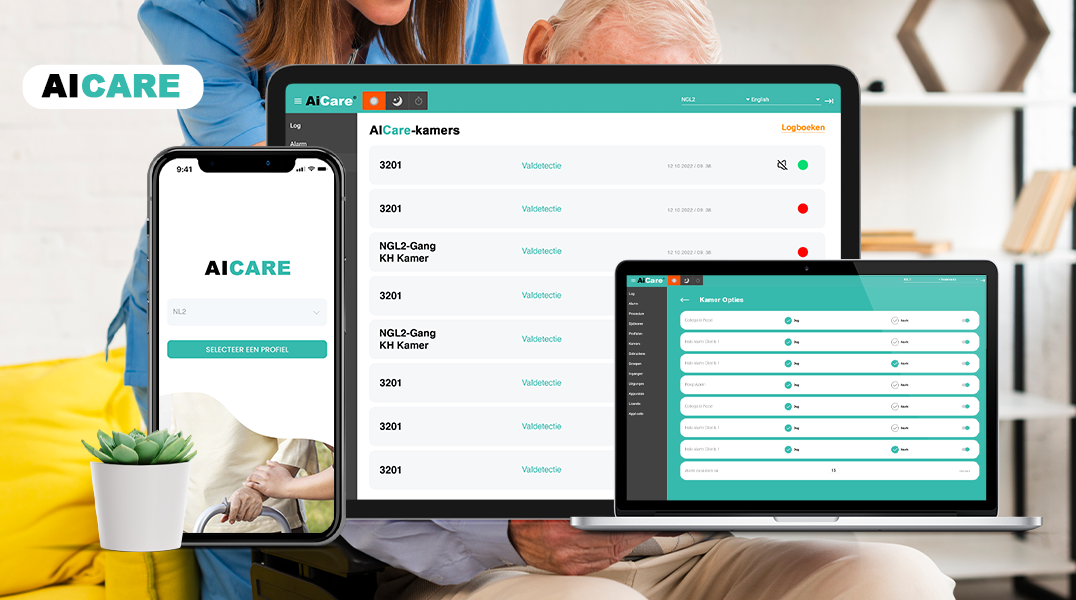
An AI clinical-support system that streamlines documentation and decision-making across care teams.
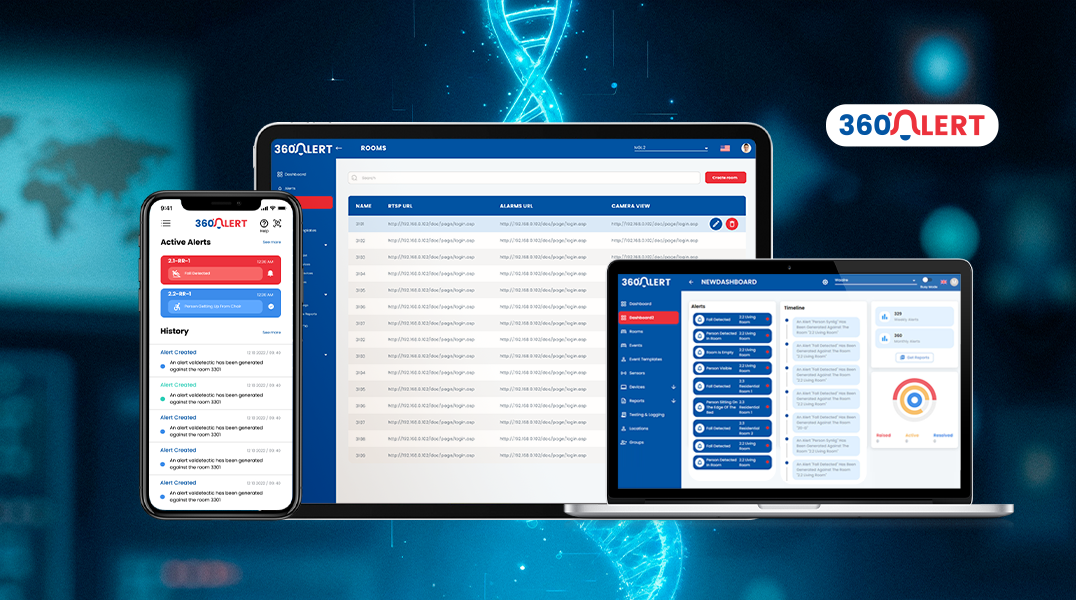
A real-time monitoring platform that detects anomalies and escalates critical events the moment they happen.
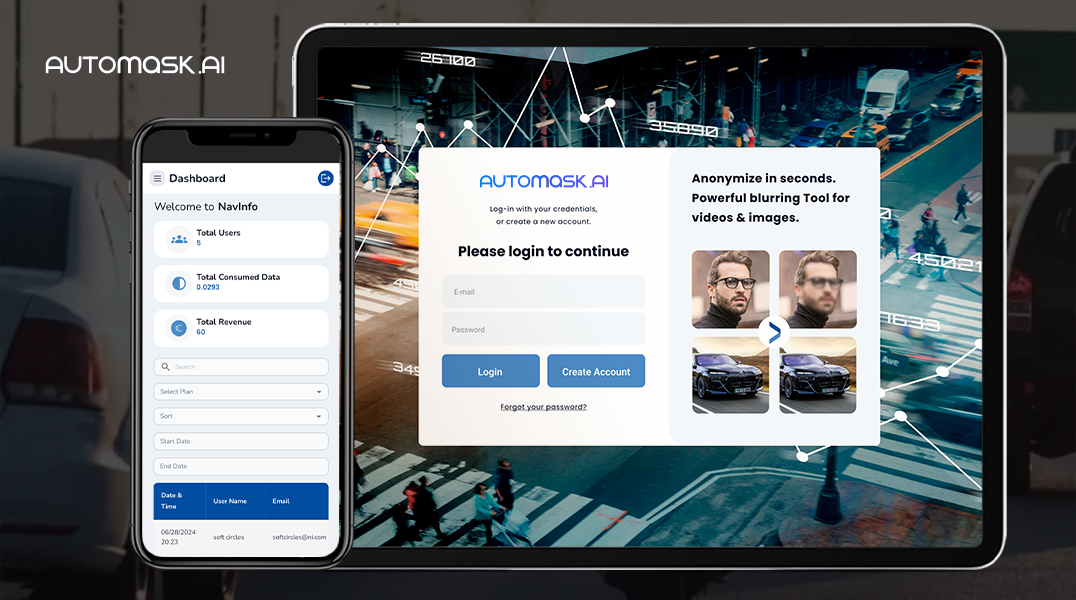
A computer-vision tool that automates image masking at scale, cutting manual editing time for creative teams.
AI agent development services cover the strategy, design, engineering and support needed to build software agents that plan tasks, use tools and act on your behalf. A typical engagement includes workflow mapping, agent architecture, integration, evaluation and ongoing AgentOps.
A chatbot answers questions inside a conversation. An AI agent can plan steps, call tools and complete tasks across your systems, such as updating a CRM record or processing a refund. Our guide on what agentic AI is explains the difference in more detail.
Cost depends on the number of workflows, integrations, autonomy level and compliance needs. A single-task agent costs far less than a multi-agent system with deep ERP integration. We share a scoped estimate after a free consultation, with fixed-price and time and material options.
A proof of concept usually takes two to four weeks. Most focused agents reach production four to eight weeks later, while multi-agent systems are delivered in phases. Our guide on how to build AI agents walks through each stage.
Agents get least-privilege tool access, so they can only touch what each task needs. Risky actions pass through human approval gates, every step is logged for audit, and guardrails block unsafe inputs and outputs.
Yes. We connect agents to CRM, ERP, ITSM and custom apps through secure APIs and Model Context Protocol servers. That way, agents work inside the tools your team already uses instead of creating a new silo.
A multi-agent system splits a complex job across specialized agents, such as a planner, a worker and a reviewer. They share memory and hand off tasks, which often improves accuracy on long workflows compared with one general agent.
Yes. We can deploy agents inside your private cloud or on premises with self-hosted LLMs such as Meta Llama or Mistral. Sensitive data then stays inside your environment under your own security controls.
Tell us about the workflow, systems and goals you have in mind. Our AI agent development agency will recommend the right agent design, tools and roadmap to prove value fast.