DenebrixAI builds custom computer vision software that sees, understands and acts on visual data. Our computer vision developers create object detection, image segmentation, OCR and video analytics systems with deep learning models trained on your own images.
We take each solution from proof of concept to production, running in the cloud, on premises or on edge devices right beside your cameras.
Images and video flow through trained neural networks that return detections, measurements and alerts in real time.



From computer vision consulting and data annotation to model deployment, our computer vision services cover every stage of the vision pipeline.
We assess your cameras, data and goals, then define accuracy targets, latency budgets and a roadmap from proof of concept to production.
Custom YOLO and CNN models detect, count and track people, vehicles, products or defects in images and live video streams.
Semantic and instance segmentation separate every object at pixel level for medical imaging, agriculture and precise quality inspection.
Optical character recognition reads labels, invoices, IDs and handwritten forms, then sends clean structured data to your business systems.
Facial recognition systems for ID authentication and access control, built with consent flows, bias testing and privacy safeguards.
Real-time video analytics detect events, monitor zones and measure foot traffic from existing CCTV, with alerts sent the moment they happen.
Automated quality control spots scratches, cracks and missing parts on production lines faster and more consistently than manual checks.
Bounding boxes, polygons and keypoints labeled with strict QA, plus synthetic data when real examples are rare or hard to collect.
Optimized models run on NVIDIA Jetson, mobile and embedded devices for low latency, offline operation and lower cloud costs.
A model that scores well on clean test images can still fail on the factory floor. We train and test with footage captured under variable lighting, motion blur, occlusion and unusual camera angles, so accuracy holds up where your business actually runs.
We report precision, recall and mAP for each use case, and we agree in advance how much a false alarm or a missed detection really costs you.
Low-light footageOccluded objectsSynthetic dataFew-shot learning
Cameras, drones, scanners and sensors.
Cleaning, resizing and augmentation.
CNNs and transformers on GPU or edge.
Alerts, dashboards and ERP updates.
Visual data often includes faces, license plates and sensitive scenes. We design every system with data minimization, encryption, access control and on-device processing where possible, aligned with GDPR and HIPAA requirements.
For face recognition we test accuracy across demographic groups, since a NIST study found that error rates can vary widely between algorithms and populations.
GDPR-alignedHIPAA-readyBias testingOn-premise options
A proven six-step process that reduces risk, proves value early and moves your vision system into production with measurable accuracy.
We study your use case, cameras and data, then set accuracy, speed and budget targets before any model is trained.
We gather images and video, label them with QA checks and fill gaps with augmentation or synthetic data.
Our engineers train or fine-tune CNN, YOLO and transformer models in PyTorch or TensorFlow for your exact task.
A working PoC on your own footage shows real accuracy numbers, so you can decide on production with confidence.
We deploy to the cloud, on premises or edge devices, then connect results to your ERP, WMS, VMS or custom apps.
After launch we track model drift, collect hard cases and retrain models, so accuracy keeps improving over time.
Get a free consultation with our computer vision engineers. We will review your use case, data and hardware, then suggest the fastest path to a working proof of concept.
Wherever people inspect, count, read or watch something by hand, a computer vision solution can do it faster and around the clock.
Find surface flaws and missing parts on the line.
Count stock on shelves and pallets automatically.
Spot missing helmets and unsafe zones.
Support review of X-ray, CT and MRI scans.
Detect plant disease and animal health issues early.
Read plates for parking and gate access.
Analyze movement for sports and ergonomics.
Track planogram compliance and out-of-stocks.
Match selfies to documents for secure onboarding.
Monitor roads, docks and yard movements.
Engineers who understand deep learning, data and the business problem behind every camera.
We prove accuracy on your own data first, so you only invest in production when the numbers make sense.
Clear precision, recall and latency targets are agreed upfront and reported at every milestone.
We deploy where your data lives, from AWS and Microsoft Azure to NVIDIA Jetson devices on the shop floor.
Encrypted pipelines, access controls and privacy by design keep visual data safe and compliant.
Proven frameworks, models and cloud services, chosen for accuracy, speed and long-term maintainability.
Each industry has its own cameras, rules and edge cases. Pick yours to see the problem we usually solve, what we build and where we would start.
Manual inspection misses small defects, slows lines down and varies from shift to shift, especially on reflective or deformable surfaces.
Defect detection and grading, assembly verification, predictive maintenance from thermal imaging and worker safety monitoring.
Defect escape rate, inspection time per unit, scrap rate and unplanned downtime.
Visual InspectionDefect GradingThermal Imaging
According to the Stanford AI Index, the FDA had authorized 223 AI-enabled medical devices by 2023, up from just six in 2015, yet every model must still protect patient data.
Medical image analysis for X-ray, CT and MRI, cell counting, wound tracking and patient fall detection with HIPAA-aware pipelines.
Review time per study, sensitivity and specificity, false alarm rate and clinician adoption.
Medical ImagingFall DetectionPathology AI
Out-of-stocks, misplaced products and long queues cost sales, but staff cannot watch every aisle all day.
Shelf monitoring, planogram compliance, foot traffic analytics, visual product search and shoppable video.
On-shelf availability, conversion rate, queue time and shrink.
Shelf AnalyticsVisual SearchFootfall Counting
Diseases, pests and water stress spread quickly, while drone and satellite images pile up faster than agronomists can review them.
Crop disease detection, yield estimation, weed mapping, fruit counting and livestock health monitoring from drones and fixed cameras.
Yield variance, chemical use per acre, detection accuracy and time to action.
Crop HealthYield EstimationLivestock Monitoring
Driver assistance, in-cabin monitoring and paint inspection all need vision models that stay accurate in rain, glare and darkness.
Driver monitoring, lane and sign detection, license plate recognition and automated paint and body inspection.
Detection accuracy across conditions, false alerts, inspection throughput and warranty claims.
Driver MonitoringPlate RecognitionPaint Inspection
Damaged goods, misreads and manual counts slow down docks, while errors travel all the way to the customer.
Barcode and label OCR, parcel dimensioning, damage detection, pallet counting and dock door monitoring.
Read rate, mis-ship rate, dock turnaround time and damage claims.
Label OCRDamage DetectionDimensioning
Operators cannot monitor hundreds of camera feeds at once, so real incidents are often noticed too late.
Crowd analytics, intrusion and loitering detection, traffic monitoring and smart home security with privacy masking.
Response time, false alarm rate, incidents detected and operator workload.
Video AnalyticsIntrusion DetectionTraffic Monitoring
Coaches and fitness apps want detailed movement analysis without wearables or expensive lab equipment.
Pose estimation, player tracking, form correction in fitness apps and automated highlight generation.
Tracking accuracy, analysis time per session, user engagement and injury indicators.
Pose EstimationPlayer TrackingForm Feedback
Exam integrity, handwritten work and engagement are hard to measure at scale, especially in online classes.
Handwriting OCR for grading, proctoring with privacy safeguards, lab experiment analysis and accessibility tools.
Grading time saved, OCR accuracy, flagged incidents reviewed and student satisfaction.
Handwriting OCRSmart ProctoringAccessibility Tools
Start small with a proof of concept, then scale with the model that matches your roadmap and in-house skills.
A fixed-scope PoC that tests your use case on real footage and reports accuracy, speed and estimated production cost.
Computer vision engineers, data annotators and MLOps specialists who join your team on a flexible monthly plan.
Ongoing monitoring, retraining, hardware updates and new features for vision systems already in production.
A look at AI and computer vision systems we have shipped into production for real clients.
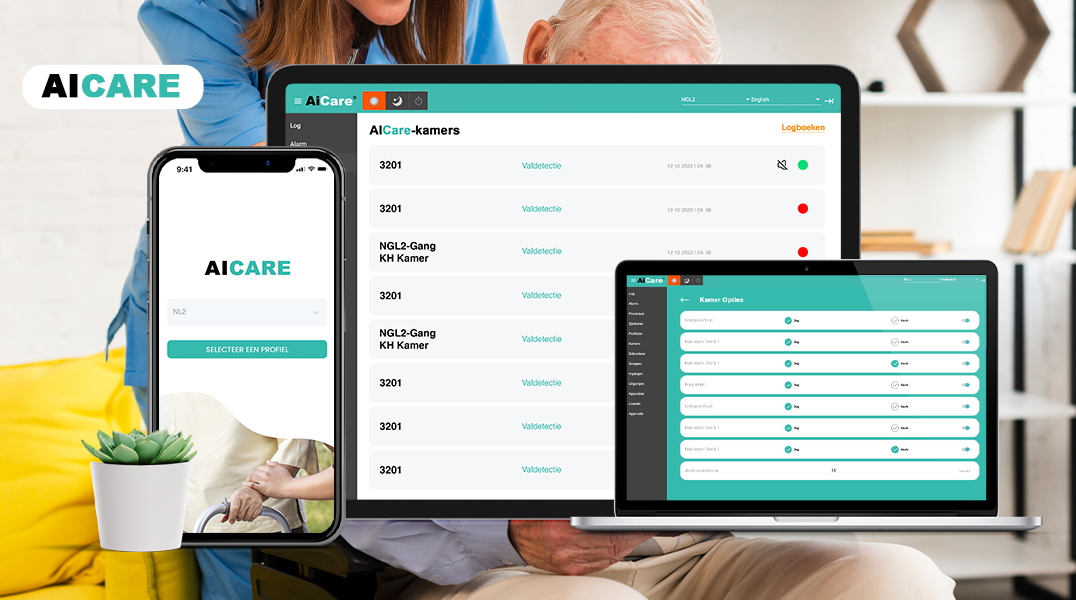
An AI clinical-support system that streamlines documentation and decision-making across care teams.
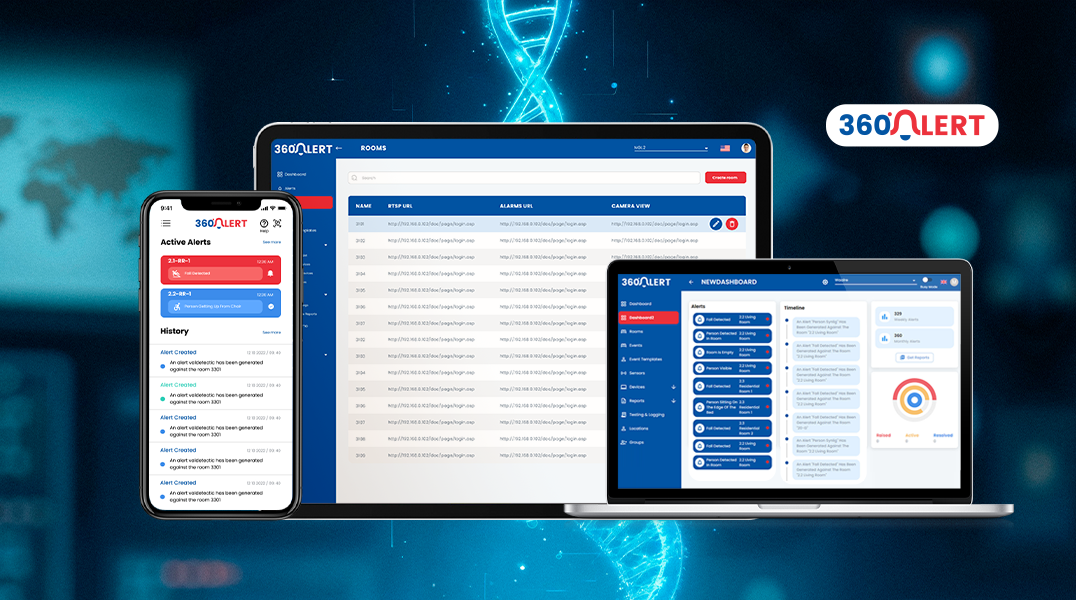
A real-time monitoring platform that detects anomalies and escalates critical events the moment they happen.
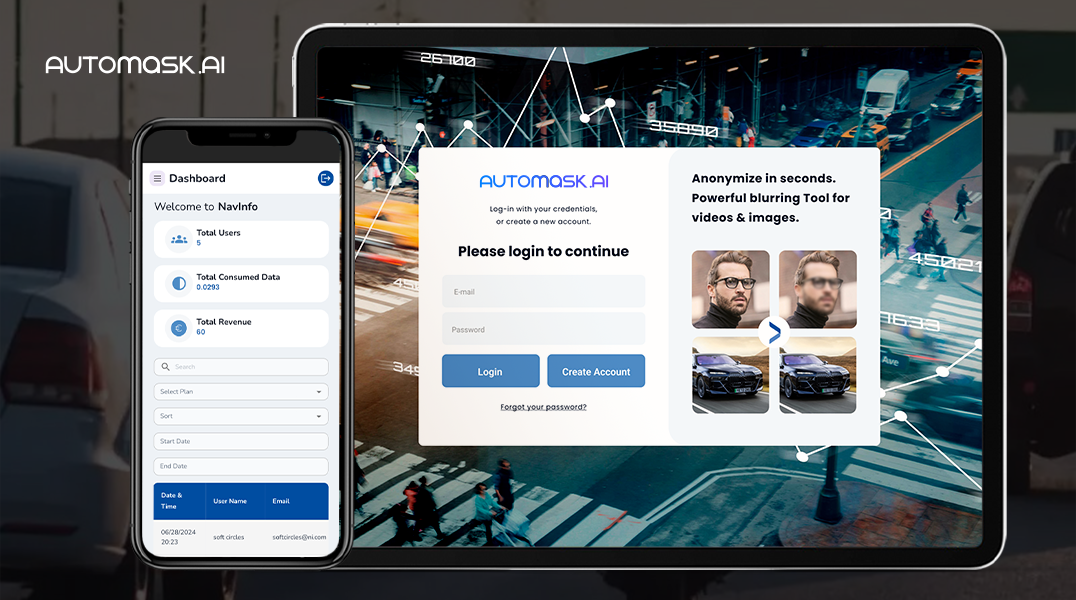
A computer-vision tool that automates image masking at scale, cutting manual editing time for creative teams.
Computer vision development services design, train and deploy software that understands images and video. A typical project covers consulting, data collection and annotation, deep learning model development, integration with your systems and ongoing monitoring, so the solution keeps working in real conditions.
Cost depends on the use case, data volume, accuracy targets and deployment hardware. A proof of concept usually costs much less than a full production rollout across many sites. We share a clear estimate after a free discovery call, including hardware, cloud and retraining costs.
Many projects start with a few hundred to a few thousand labeled images per class. When real examples are rare, we use pretrained models, transfer learning, augmentation and synthetic data to reach useful accuracy with less data.
Yes. We optimize models with quantization and tools like TensorRT and ONNX Runtime, so they run in real time on NVIDIA Jetson, industrial PCs or mobile devices. Edge deployment also keeps sensitive footage on site and works without an internet connection.
In most cases, yes. We work with existing IP and CCTV cameras when resolution and frame rate are sufficient, and we connect results to your ERP, WMS, VMS or custom apps through APIs.
We use encryption, strict access control, data minimization and face or plate blurring where needed. Our approach follows the NIST AI Risk Management Framework and supports GDPR and HIPAA requirements.
A focused proof of concept usually takes four to eight weeks. A production system with integrations, edge hardware and monitoring often takes three to six months, delivered in stages so you see results early.
Let’s design a custom computer vision solution that cuts manual inspection, catches problems earlier and turns visual data into decisions your team can act on.