
Preparing for a coding interview can feel confusing. There are coding interview preparation books, online judges, courses, videos, and many technical interview books that all say they will help you crack the interview. It is easy to collect many resources and still not know what to do next.
A small, carefully chosen set of coding interview books and software engineering interview books can give you a clear direction. The right books show you how interviewers think, which patterns are important, and how to plan your practice instead of just giving you random questions.
This guide explores the best coding interview books for FAANG preparation and other tech interview paths. It explains how each book differs, what skills it builds, and when to use it—whether you’re a beginner or already preparing for big tech interviews.
11 Best Coding Interview Books For Most Candidates
1. Cracking the Coding Interview – The Classic Foundation
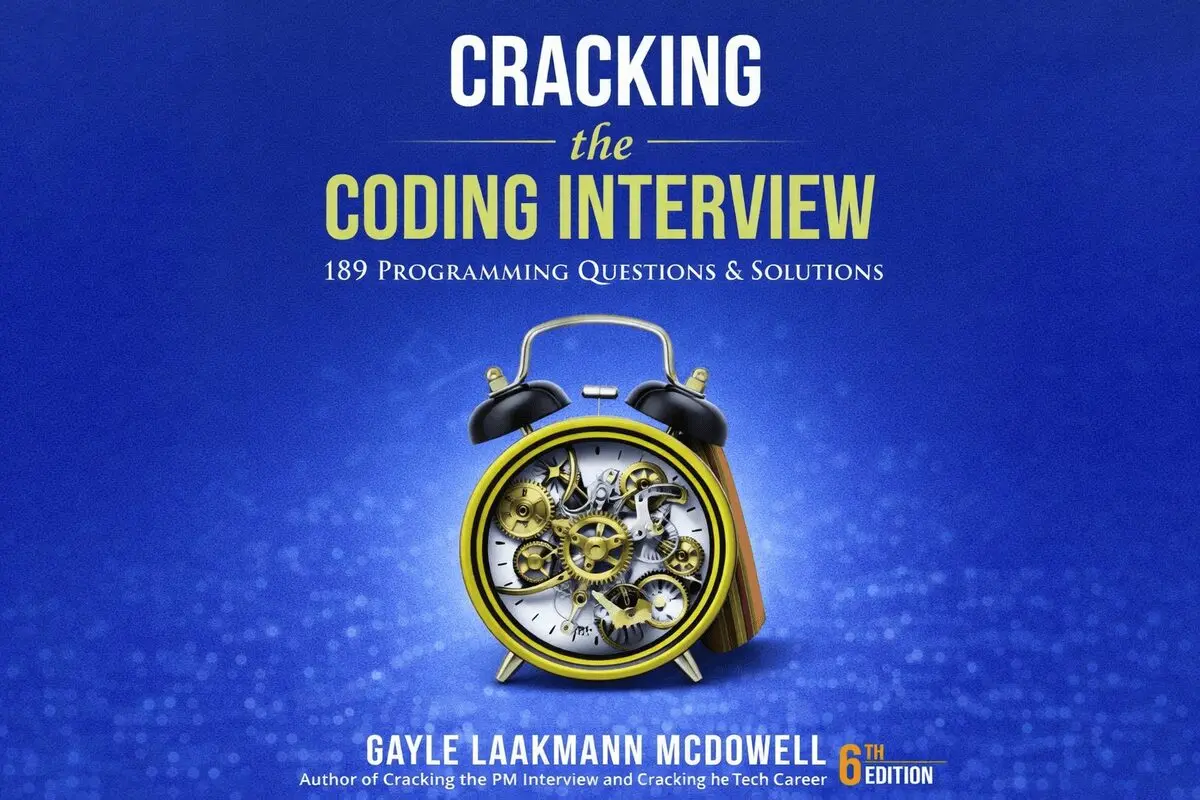
Cracking the Coding Interview (CTCI) is one of the most popular books for coding interview preparation. The 6th edition includes 189 programming questions with detailed solutions and covers topics like arrays, linked lists, trees, graphs and bit manipulation. It also explains the whole interview process, from phone screens and on site interviews to whiteboard coding and behavioral questions.
This book is a good choice if you already know basic data structures and want one main resource that teaches both coding questions and how interviews actually work. A simple way to use it as a tech interview study guide is to set a small daily goal, such as two to four problems. First try to solve each question on your own. Then read the solution, make sure you understand the idea, and write the code again from memory while saying your thought process out loud.
The main limitation is system design, which is not covered in much depth, and a few questions feel a bit old compared to newer online problems. UseCracking the Coding Interview as your foundation, then add a separate system design book and regular practice on sites like LeetCode to complete your preparation.
2. Elements of Programming Interviews – For Deep Problem Solving

Elements of Programming Interviews (EPI) is more complex and advanced than CTCI. It is one of the best alternatives to Cracking the Coding Interview for candidates who want tougher questions. It includes over 250 fully solved problems, with variations and clear explanations of the time and space complexity of each solution.
EPI is a good choice if you can already solve medium LeetCode questions and want to grow your problem-solving skills. It covers basic and advanced data structures, searching, sorting, common algorithm ideas, concurrency and some system design. The solutions can feel heavy at first, but they take you through each idea step by step.
You will learn the most from EPI if you use it after a more general coding interview book like CTCI or Programming Interviews Exposed. It is normal for one hard problem to take an hour or more. What matters is that you understand the idea and the steps at the end, not how fast you solved it. If you want to pass tough rounds at big tech companies or strong startups, Elements of Programming Interviews is one of the strongest coding interview books you can choose.
3. Programming Interviews Exposed – Friendly Starting Point

Programming Interviews Exposed is written to make coding interview questions feel less scary. It explains common topics like arrays, strings, binary trees, recursion, sorting, searching, and databases, and uses simple examples to show how each idea works.
This book is especially useful if you do not have a computer science degree or if you have not worked with algorithms for a long time. It introduces the main topics in a gentle way, instead of starting with the most difficult questions.
Compared to Cracking the Coding Interview, it moves at a slower pace and the problems are easier. This makes it a good middle step between “I can write code” and “I am ready for tougher interview questions”. You can use it as your warm-up programming interview book, then move to CTCI or EPI once you feel confident with the basics.
4. Coding Interview Questions – High-Volume Practice

Coding Interview Questions by Narasimha Karumanchi is a large set of practice problems that mainly focuses on data structures and algorithms. For many problems, the book explains the algorithmic complexity and often shows more than one way to solve the same question.
This book is a good choice if you already have one main book and want extra problems to practice. It is especially useful if you like comparing different methods for topics like trees, graphs and dynamic programming, as well as some lower-level implementation tricks.
You can use Coding Interview Questions along with Cracking the Coding Interview or Elements of Programming Interviews when you want more variety, but still want a similar style of questions and explanations.
5. The Algorithm Design Manual

The Algorithm Design Manual by Steven Skiena is a favorite among many experienced engineers and interviewers. It is not just a list of algorithms. It teaches you how to think about a problem, how to choose the right data structures and how to reason about speed and memory in real-world systems.
This book is a good choice if you already know the basics and want deeper understanding for FAANG-style jobs or research-focused roles. It also helps you explain the pros and cons of different solutions, which matters a lot in higher-level interviews.
You can use the first part of the book to strengthen your knowledge of graphs, dynamic programming, greedy algorithms and similar topics. After that, you can read the case studies to see how these ideas are applied in real examples.
6. Introduction to Algorithms (CLRS)
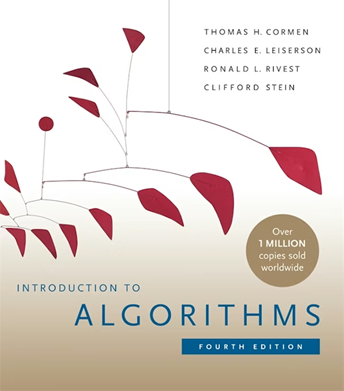
Introduction to Algorithms (CLRS), is a classic textbook used in many universities. It covers a very broad range of major algorithms and data structures in depth.
This is not a quick coding interview book. Most candidates do not need to read it from beginning to end. It works better as a reference. You can open it when you want a clear explanation of topics like red-black trees, network flow, or NP-complete problems, or when a certain idea keeps confusing you during practice.
If you enjoy theory, or you are preparing for very algorithm-heavy roles, CLRS gives you a strong foundation. It helps you understand why an algorithm works, not just how to code it.
7. Algorithms for Interviews
Algorithms for Interviews is about applying algorithms to real interview-style questions. The problems are organized by topic, and they encourage you to think carefully about correctness and about how efficient your solutions are.
This book is most useful after you finish a general coding interview book and want extra practice that focuses mainly on algorithms. It is a good choice if you are aiming for companies that care more about deep problem-solving than about exact programming language syntax.
Many readers find the questions harder than in beginner books, so it works best as a second step once you feel comfortable with medium-level LeetCode problems.
8. System Design Interview: An Insider’s Guide

System Design Interview: An Insider’s Guide by Alex Xu is a widely used book for system design interviews. It uses real interview-style questions, such as designing a URL shortener, a news feed or a chat app, and shows you how to break each problem into clear, simple steps.
As you read, you learn how to talk about requirements and constraints, draw high-level system diagrams, and explain ideas like scaling, replication, caching and consistency. Volume 1 focuses on the core ideas and common patterns, and Volume 2 adds more examples and covers additional, often more advanced, scenarios.
Many people prepare by using Cracking the Coding Interview for coding rounds and System Design Interview for system design rounds. If you want to go deeper later, you can also study Grokking the System Design Interview and Designing Data-Intensive Applications, but Alex Xu’s books are a common starting point for system design interview prep.
9. Beyond Cracking the Coding Interview

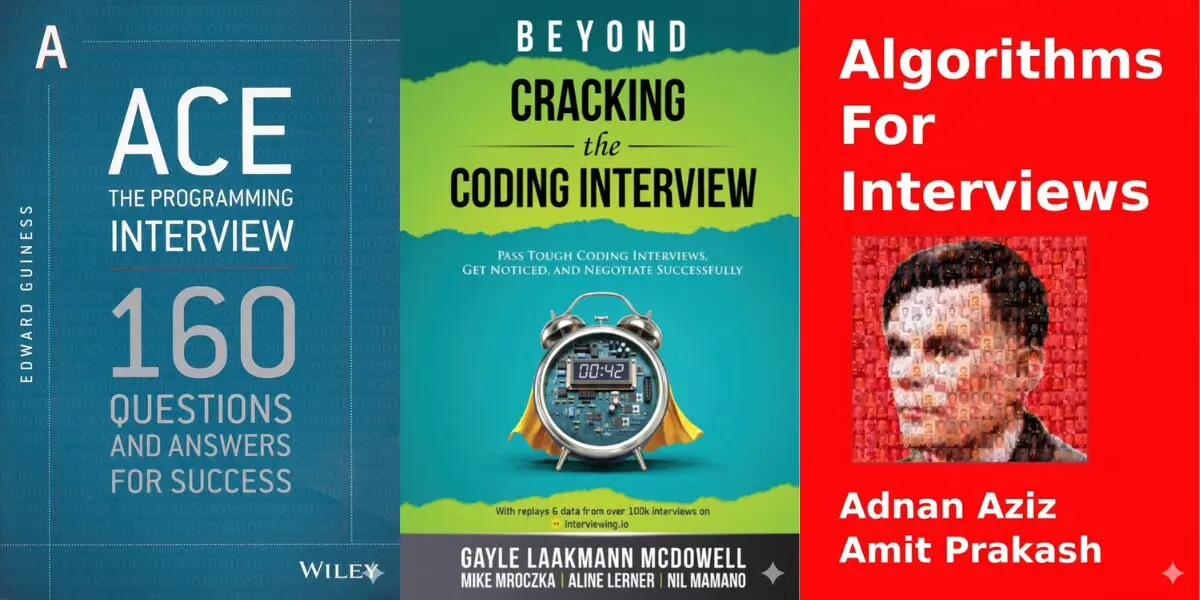
Beyond Cracking the Coding Interview builds on your coding prep and also focuses on everything around the technical work. It talks about how to build a strong profile, get noticed by recruiters, choose the right companies, and negotiate your offers. It is written by Gayle Laakmann McDowell and co-authors, who have seen thousands of candidates go through big tech hiring processes.
This book is useful if you already have a clear plan for your coding prep and now want to improve your overall interview strategy. It reminds you that passing interviews is not only about data structure questions such as trees and graphs. Your career stories, your behavioral answers, and the way you handle offers also play a big role.
10. Ace the Programming Interview
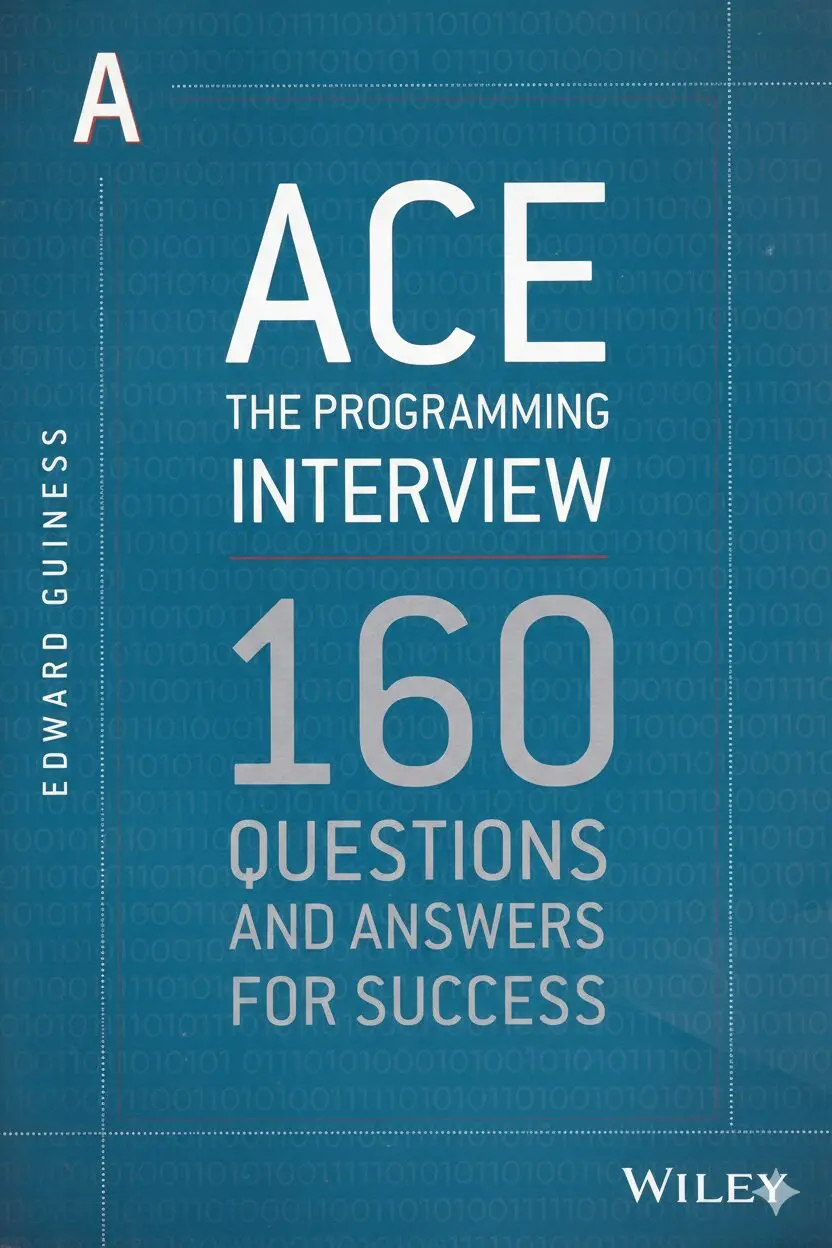
Ace the Programming Interview is a coding interview book with 160 questions and answers, with a strong focus on practical programming interview tasks. It feels more like a question-and-answer collection than a complete study guide.
You can use it for extra practice after you finish your main book, or as a quick review in the last few weeks before your interviews. Because it is shorter than Cracking the Coding Interview (CTCI) and more compact than Elements of Programming Interviews (EPI) in scope, it is a good choice when you have limited time or you want to see similar ideas explained by a different author.
11. Grokking the Coding Interview (Patterns Resource)
Grokking the Coding Interview: Patterns for Coding Questions is usually a course, but you can use it like a book. It groups questions by pattern, for example sliding window, two pointers, cyclic sort and merging intervals, instead of by data structure.
This pattern-based approach helps because real interview questions rarely look exactly like problems you have solved before. When you notice that a new problem follows a pattern you already know, you can adapt that pattern and build a solution more quickly.
You can use Grokking the Coding Interview with any of the other books in this guide. First learn a pattern from Grokking, then strengthen it by solving similar problems in your main coding interview book and on LeetCode or HackerRank.
Why Books Still Matter For Coding Interview Prep In 2026
The market for developers is still very competitive. In the United States, jobs for software developers and related roles are expected to grow about 15% between 2024 and 2034. This is much faster than average, with more than 129,000 openings per year. In simple terms, many people are trying to get into the same roles and the same interview processes.
At the same time, platforms like LeetCode have become a normal part of interview preparation. The site gets more than 26 million visitors per month as of 2025. One report says that around 85% of tech companies use LeetCode-style questions in interviews, and this trend is still continuing.
A good programming interview book, plus one strong algorithm interview book and one data structures interview book, gives you a solid base, helps you spot recurring problem-solving patterns, and shows you how interview rounds usually work.
How To Choose The Right Coding Interview Book
Not every book in this list is right for every developer. Before you buy anything, it helps to think about a few simple points.
Your Current Level
If you have not really learned data structures and algorithms before, a very theoretical book will probably confuse you and slow your progress. In that case, you should pick a beginner-friendly coding interview book that teaches the basics in small, clear steps.
If you can already solve medium LeetCode problems without much trouble, you do not need another beginner book. At that stage, you need more depth, harder questions, and a clear sense of which solution is faster, which uses less memory, and when to choose each one.
Your Target Companies
For FAANG and similar big tech companies, interviewers usually want you to be strong in three areas: algorithms, system design and behavioral questions. You will probably go through several rounds, and each round will focus on a different skill.
In many smaller or mid-size companies, the main priority is that you can write clear, working code and explain your ideas in a simple way. They usually focus less on very hard, puzzle-style interview questions. Because of this, you may not need the most advanced theory-heavy book if you are mainly applying to these kinds of companies.
If you are mainly targeting FAANG interviews and similar big-tech roles, look for interview prep books for developers that include practice problems, real interview questions, and at least some coverage of system design interview books so you are ready for every round.
Your Timeline
If you have around two or three months before your interviews, you can finish one main coding interview book, add some system design study if you need it, and still spend a lot of time solving problems on LeetCode or HackerRank.
If you don’t have much time, pick one or two good coding interview study plan books and stick to them instead of jumping between lots of different resources.
How You Like To Learn
Some people like deep theory, proofs, and long, detailed chapters. Other people learn better from short explanations, simple patterns, and lots of examples. Try to choose books that match the way you like to learn, so you stay motivated and actually finish them.
Quick Checklist Before You Pick A Book
- First, ask yourself: am I a beginner, intermediate, or advanced?
- Next, ask: do I need help with system design and behavioral interviews, or only with coding questions?
If you keep these questions in mind while you read the list below, it will be much easier to choose the right place to start.
Quick Overview Of The Best Coding Interview Preparation Books
Here is a quick overview of the main software developer interview study material:
| Book / Resource | Best For | Level | Short Notes |
| Cracking the Coding Interview (Gayle Laakmann McDowell) | Main all round coding and behavioral prep | Intermediate | Sixth edition, 189 questions, explains the full interview process |
| Elements of Programming Interviews | Very strong problem solving practice | Upper intermediate to advanced | More than 250 hard problems with detailed step by step solutions |
| Programming Interviews Exposed | Gentle, guided first interview book | Beginner to intermediate | Easier questions, good starting point if you are new to interviews |
| Coding Interview Questions (Narasimha Karumanchi) | Extra coding practice questions | Intermediate | Many problems with time and space complexity explained |
| The Algorithm Design Manual (Steven Skiena) | Building strong algorithm understanding | Upper intermediate to advanced | Helpful for FAANG level depth and real problem discussions |
| Introduction to Algorithms (CLRS) | Deep theory and complete coverage | Advanced | University style textbook, better as a reference than a first prep book |
| Algorithms for Interviews | Interview focused algorithm practice | Upper intermediate | Tough problems that train careful thinking and problem solving |
| System Design Interview: An Insider’s Guide (Alex Xu) | System design interview preparation | Intermediate to senior | Clear system design questions and model answers |
| Grokking the Coding Interview (patterns style resource) | Learning and spotting problem patterns | Intermediate | Pattern based prep, works well together with any main coding interview book |
| Ace the Programming Interview | Extra question and answer style practice | Intermediate | About 160 coding questions with explanations |
| Beyond Cracking the Coding Interview | Overall career and interview strategy | Intermediate to senior | Focuses on getting noticed, telling your story, and handling offers |
When To Read Which Book: Beginner To Advanced Roadmap
It is easy to buy many technical interview books and then feel stuck. In most cases, it is better to choose a few good ones and study them properly.
Suggested order by level
- Beginner: start with Programming Interviews Exposed or Coding Interview Questions
- Intermediate: move to Cracking the Coding Interview and add light pattern practice with something like Grokking the Coding Interview
- FAANG / Senior: keep Cracking the Coding Interview as your base, then add Elements of Programming Interviews or Algorithms for Interviews, plus The Algorithm Design Manual and System Design Interview
At any level, your goal is not to read every page. Pick one main coding interview book, add one system design resource if your role needs it, and maybe one extra source of problems. Then follow a simple loop: study, practice, review.
How To Combine Books With LeetCode And Other Practice Sites
Books help you understand ideas and patterns. Sites like LeetCode and HackerRank help you turn those ideas into working code under time pressure. You will learn the most if you use both.
One simple way to combine them:
- Choose a topic in your current coding interview book, for example trees or dynamic programming.
- Read the explanation and solve a few important questions from the book.
- Go to LeetCode or another site and solve several problems with the same topic. Try not to open the hints too quickly.
- When you are done, compare your solution with the book solution and with a few strong online solutions, and write down what you can improve.
Try to avoid common mistakes like reading without writing any code, jumping between many books without finishing one, or never using a timer. If you treat your books as a clear study plan and practice sites as the place where you test yourself, you will improve faster than by solving random questions without structure.
FAQs – Best Coding Interview Books
Is Cracking the Coding Interview still worth using now?
Yes. The core ideas in Cracking the Coding Interview (CTCI) are still useful, because data structures, algorithms and behavioral questions have not changed much. Its weak point is system design, so it works best if you use CTCI as your main base and add a separate system design resource.
Which coding interview book is best for complete beginners?
If you are new to interviews or do not have a computer science background, Programming Interviews Exposed is usually the easiest place to start. Coding Interview Questions is also a good choice if you want many worked examples. Once you are comfortable with one of these, you can move on to Cracking the Coding Interview.
Which book should I use for data structures and algorithms interview questions?
For direct interview practice, Cracking the Coding Interview and Elements of Programming Interviews (EPI) are both strong options. If you also want to understand the theory behind the algorithms, The Algorithm Design Manual and Introduction to Algorithms (CLRS) help you learn why the methods work, not only how to code them. Many people choose one practical book and one deeper theory book.
Do coding interview books really help compared to just doing LeetCode?
Yes, they help in a different way. A good coding interview preparation book explains patterns, common mistakes and how interviewers think, which you will not see from random LeetCode questions alone. LeetCode then lets you apply those ideas in real code, so using both together is usually more effective.
How many coding interview books do I actually need?
Most people only need one main book, one extra resource and one system design book if the role includes system design rounds. For example, Cracking the Coding Interview plus Elements of Programming Interviews and System Design Interview is already a very complete set. It is better to go deep on a few good books than to skim many without finishing them.
Are coding interview books enough to crack FAANG?
Coding interview books alone are rarely enough to crack FAANG-level interviews. They give you the structure, mock interview strategies, and interview frameworks, but you still need real-time practice on LeetCode or similar platforms, plus system design prep and behavioral practice. Think of the books as your roadmap and the platforms as your training ground.

Comments are closed