
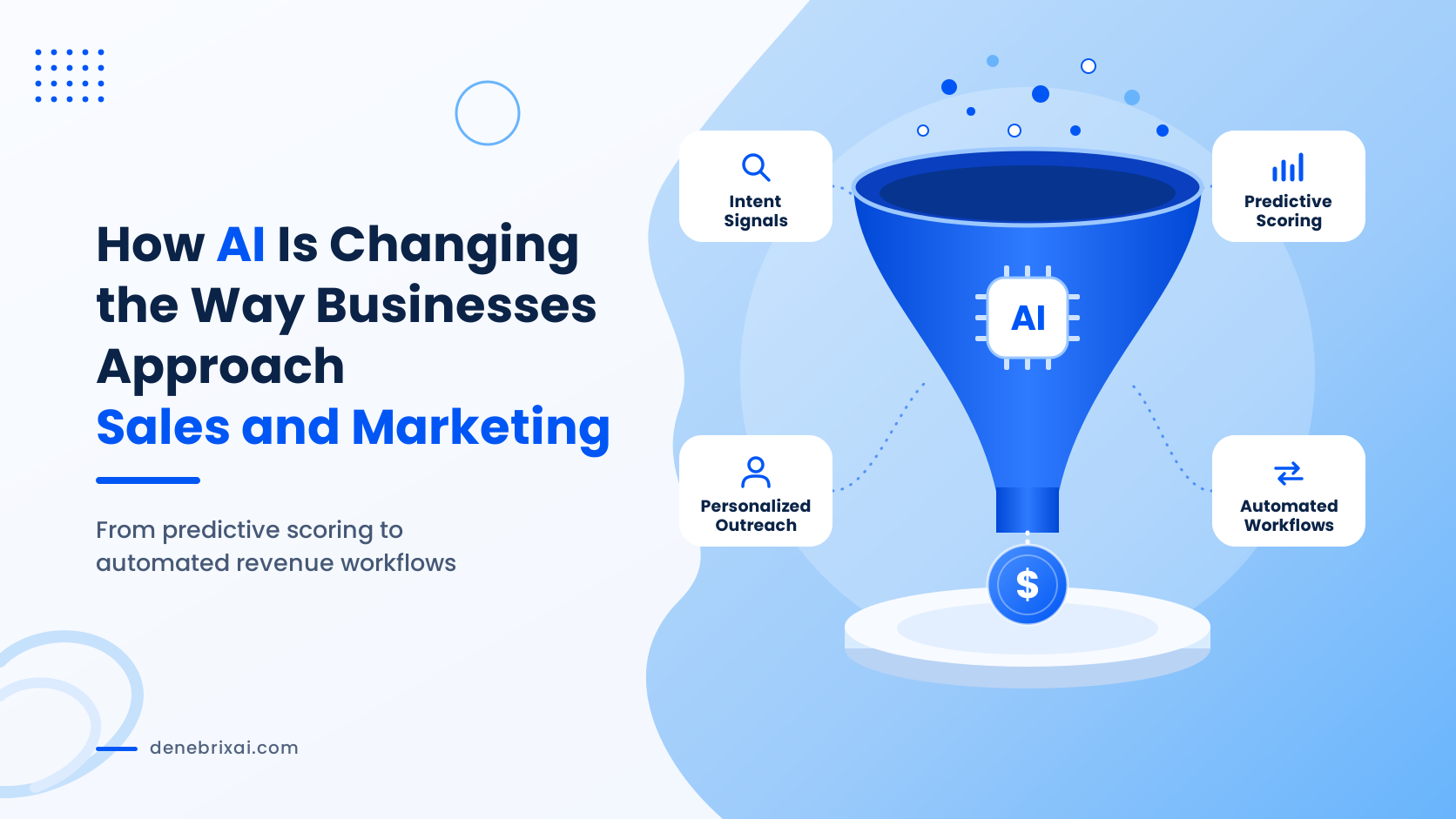
Modern sales and marketing teams operate in a $600 billion nationwide niche, and they no longer have the luxury of working in isolated silos or relying on lagging-indicator reports. The rapid maturation of artificial intelligence has redefined how organizations identify prospects, engage leads, and close revenue. Rather than relying on static playbooks, forward-thinking go-to-market teams build unified ecosystems where real-time data drives every customer touchpoint.
Integrating intelligent automation across the customer journey removes the guesswork from pipeline execution. It allows reps to focus on high-value conversations while automated engines handle lead qualification, predictive scoring, and hyper-personalized campaign execution.
The Shift to Predictive Intelligence in B2B Revenue Operations
Traditional lead scoring models depended heavily on explicit actions, such as downloading a whitepaper or filling out a contact form. These static models often misjudge buyer intent because they fail to capture broader digital signals.
AI shifts the paradigm from historical reporting to predictive foresight. Advanced machine learning models scan buyer signals across hundreds of digital channels, identifying companies exhibiting active purchasing behavior long before they fill out a form. Business software networks generate tens of thousands of distinct intent signals daily, providing an unprecedented view of account readiness.
When your revenue engine monitors intent continuously, sales reps spend their time engaging high-probability accounts rather than chasing cold prospects. Marketing teams can simultaneously run targeted display ads and tailored content feeds specifically designed for accounts entering an active buying window. It’s part of the wider impact AI is having on this sector.
Unifying Revenue Teams with Advanced Go to Market Platforms
The historic divide between sales and marketing usually stems from disparate tools and misaligned data. Marketing tracks lead volume while sales measures closed revenue, creating friction over lead quality and handoff timing.
Modern platforms resolve this alignment problem by establishing a single source of truth for prospect data. Deploying the best AI GTM software lets revenue leaders orchestrate synchronized plays where outreach, dynamic content delivery, and account assignment run automatically based on prospect engagement. Automated orchestration changes how campaigns scale across complex enterprise buyer groups:
- Machine learning algorithms continuously segment database contacts based on real time behavioral changes
- Dynamic email sequences adjust messaging copy automatically based on an account’s tech stack and recent funding news
- Revenue operations dashboards automatically trigger sales tasks when multiple decision makers within a target account research specific solutions
Connecting these touchpoints ensures that every outreach attempt feels relevant to the prospect. Marketing efforts directly seed target accounts, and sales professionals join the conversation with full context regarding what the prospect needs.
Hyper Personalization at Enterprise Scale
Generic bulk email broadcasts have lost their effectiveness. Modern buyers expect communication tailored to their specific industry, tech stack, current pain points, and job role. Manually executing this level of personalization across thousands of target accounts was once impossible without bloated headcount.
AI-driven language models and enrichment engines bridge this gap by writing customized engagement sequences tailored to individual buyer personas. Content engines analyze recent company filings, press releases, job postings, and executive interviews to generate hyper-relevant message openers.
Instead of spending twenty minutes researching a single prospect, account executives review and approve pre-drafted outreach that automatically hits key account priorities. This combination of human oversight and machine scale boosts reply rates while keeping campaign cadence steady.
Optimizing Customer Acquisition Costs with Automated Workflows
Scaling revenue efficiency requires lowering customer acquisition costs while maintaining deal quality. Manual data entry, disconnected tech stacks, and slow response times waste resources and cause high-intent leads to drop out of the funnel.
Automated agentic workflows streamline pipeline operations by managing administrative tasks without human intervention. AI assistants qualify inbound web traffic through interactive conversations, schedule meetings directly on calendar links, and log updated contact information into CRM fields. Enterprise marketers report productivity gains when routine administrative friction is eliminated from daily rep workflows.
Reclaiming administrative hours allows sales teams to focus on relationship-building, discovery calls, and contract negotiation. Simultaneously, automated lead routing ensures high-priority enterprise prospects connect with account executives within minutes instead of days.
Building a Data First Foundation for Long Term Revenue Growth
Adopting AI tools without clean data architecture leads to inconsistent messaging and unreliable pipeline forecasts. The success of any intelligent sales or marketing initiative relies on continuous data hygiene and accurate account mapping.
Organizations seeing the highest return on AI investment treat data as a strategic asset. Regular database enrichment cleans out dead contact records, standardizes job titles, and fills missing firmographic fields. Research shows that artificial intelligence in marketing market cap continues to accelerate as enterprises invest heavily in foundational data infrastructure.
What the Future Looks Like
Combining reliable data with intelligent automation transforms go-to-market execution from a reactive volume game into a precise revenue strategy. Companies that combine clean data architecture with automated orchestration will consistently outperform competitors relying on manual processes. To discover more strategies on modernizing revenue operations and scaling pipeline efficiency, explore our other blog resources.
FAQ’s
1. How is AI changing the way businesses approach sales and marketing?
AI helps teams predict which buyers are ready to act instead of only reviewing past reports. It automates lead qualification, scoring and campaigns using real-time data.
2. Will AI replace sales reps?
No, AI handles admin work like qualifying leads and booking meetings. Reps still lead relationship-building and negotiation, and they review AI-drafted outreach.
3. How does AI improve lead scoring?
Instead of relying only on actions like form fills, AI reads buyer signals across digital channels. This helps spot accounts that are ready to buy earlier.
4. How does AI help with personalized outreach at scale?
AI studies company news, filings and job postings to draft relevant message openers. Reps then review and approve them, saving research time.
5. What do businesses need before using AI in sales and marketing?
They need clean, organized data. Without it, AI leads to inconsistent messaging and unreliable forecasts.

Comments are closed