
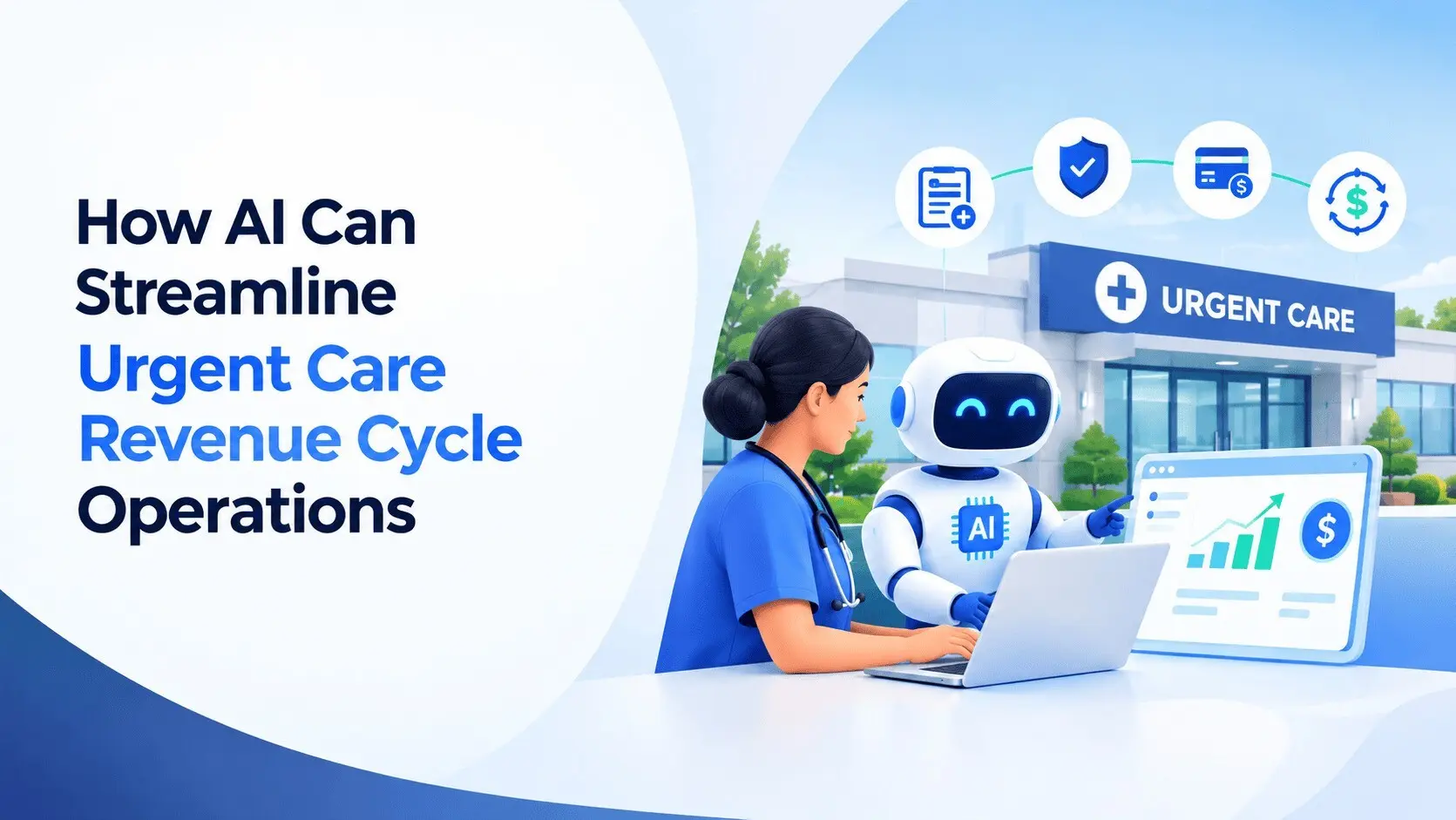
Urgent care centers are expected to treat patients in a timely manner. For ensuring this, the urgent care centers need to make sure the treatment provided to the patients is up to the mark. In the same way, the administrative work of an urgent care center should be streamlined so that the appointment scheduling, claim submission process, and payment tracking are efficient. All these processes need manual work and there are chances that the work gets delayed which may lead to backlogs.
Urgent care medical billing services help medical practices that are offering urgent care to patients maintain a healthy revenue cycle. But how is this possible? These services help manage the processes related to maintaining an efficient revenue cycle. Submitting accurate claims to payers is an essential part of keeping the financial health of an urgent care practice intact. However, there are other aspects related to keeping a healthy revenue cycle. Connected software systems and optimal practice workflows are also responsible for a high-performing RCM process.
Artificial Intelligence (AI) and automation help optimize the processes that are running urgent care practices. Incorporating the latest technology like AI in the workflows help reduce the administrative load, ensure consistent data across teams, and help staff focus on the patient care.
Understanding Medical Billing Challenges in Urgent Care
The volume of the patients in an urgent care facility is fairly larger than other clinics. Different patients need different medical services and the facilities need to work with different payers for reimbursements. Some conditions that create the several administrative challenges.
Insurance Verification and Patient Registration
Incorrect information in the record of the patient leads to delays. Also, the staff needs the information about the coverage details of the patients. Verification of the coverage and details of the benefits should be checked beforehand to avoid denials. Urgent care centers can automate this process with the help of AI tools that help identify the errors and flag information that is required. Once these tools are a part of the workflow, the overall efficiency improves and the chances of errors reduce. The best part: the issues can be found and addressed earlier.
Medical Coding and Claims Preparation
Accurate documentation lies at the heart of medical billing and incorrect codes in a claim lead to denials and rejections. To improve the coding and claims preparation process, AI-powered documentation can be used to minimize the errors. These language models extract relevant information from the clinical documents and keep the process error-free. These systems help the billing and coding teams to avoid the errors that lead to huge revenue losses.
Claim Denials and Payment Follow-Ups
Once the claim is denied, the payer gives an explanation about the reasons behind its denial. The staff reviews the explanation and identifies the information which is not present in the claim. After finding the root cause of denials, the billers appeal. This process is manual work and consumes the time of the staff. AI automation tools help improve the process by finding the reasons for denials and categorising them. The outstanding balances and the routes are determined by the intelligent systems. As a result, the person who needs to manage the claims gets the detailed information about the denial reasons and reworks the denials within time limit.
How AI Can Improve Urgent Care Billing Workflows
Different stages of the revenue cycle process can be automated with the AI tools and the urgent care practices can optimize the workflows.
1. Automating Repetitive Administrative Tasks
Sharing the data is a considerable part of the RCM process and this is the reason behind manual work. Most billing workflows revolve around repetitive tasks, like sending information from one place to the other, checking the required fields, organizing documents, and creating the reports. AI automation helps to reduce the laborious work that is done manually, from checking the records to transferring documents. All this is done with a human oversight to avoid any errors that may occur in the automated workflows. Also, an expert is needed to ensure the accuracy of the overall process.
2. Connecting Disconnected Healthcare Systems
Urgent care organizations may use separate systems for electronic health records, scheduling appointments, and other core tasks. If these platforms are unable to exchange information effectively, there is a need to enter data multiple times. Denebrix AI is designed to solve this problem. It connects the existing software and improves the legacy systems. Urgent care centers can find ways to reduce the duplication of the data and keep the relevant information at a place where anyone can access it.
3. Using Predictive Analytics to Prioritize Work
The historical data of the medical claims help identify the patterns in claim delays and help find the repetitive errors. Once an urgent care center is able to find where the problem actually is, the remedy can be found and the problem is addressed at an early stage. Predictive analytics come in to play here and help organizations find areas that need immediate attention. In this way, urgent care centers are able to find the bottlenecks in their workflow. Predictive models are able to evaluate the data in such a manner that the outputs can be improved. It does not guarantee more reimbursements from payers but an overall improvement in the process.
4. Improving Document Processing
Billing teams are mostly working with the documents that need supporting records as well. These teams may also need administrative files and make the documentation process cumbersome. AI-based document processing can optimize the process and remove the need of doing everything manually. As a result, the chances of errors are reduced and the process can be done in a rapid way. The AI models based on natural language are carefully designed and help find accurate information, record relevant changes, and help create an accurate documentation process.
Why Custom Healthcare Software Matters
Why is custom healthcare software needed? One urgent care facility has a different workflow as compared to the other. A generic automation tool can only solve one problem, but cannot address the entire workflow. The custom healthcare software is needed to make sure it aligns with all your workflows. Opting for a custom software allows urgent care centers to create it according to their own needs.
Denebrix AI develops custom software and AI solutions for optimizing the operations in a healthcare setting. Urgent care facilities can improve their workflows and improve their workflows to enhance efficiency. Before creating a software that needs to improve your overall practice, the requirements should be jot down by the healthcare leaders. A focused approach helps to create the software that is actually needed by urgent care centers.
Protecting Patient Data During AI Implementation
Protecting the patient information is the primary concern for any entity that is a part of the healthcare industry. Strict rules govern the privacy and confidentiality of the patient data. When AI tools are created, these tools become a part of the clinical workflows and practice operations. Obviously, the patient data becomes exposed to these tools and many tools may use the actual patient data. Hence, protection is the foremost concern to avoid compliance issues.
To secure the patient data, it can be encrypted and important persons can be given access to it. As a result, it gets secured and the chances of breaching the confidentiality of the patient information are reduced. The automated systems should be supervised by humans. Human oversight helps to ensure the protection of patient data and all the AI adoption by healthcare organizations should be done under the compliance obligations.
Building Smarter Healthcare Workflows With DenebrixAI
A combination of efficient processes are required to improve the overall billing operations of an urgent care practice. AI helps to automate the tasks and reduce the administrative work which is tedious. In the same way, AI tools can find the denial patterns and help create a mechanism that improves the overall capabilities of the billing team. Depending on the priority of the billing team, the practices should decide whether they are able to improve document processing, modernize workflows, or any other aspect of optimizing practice workflows. Discover DenebrixAI’s AI integration and modernization services to learn how customized AI solutions help urgent care practices build efficient systems and streamlined workflows.
Frequently Asked Questions
What do urgent care medical billing services include?
The urgent care billing services consist of verifying the insurance coverage, medical coding, creating claims, denial management, and following up on accounts receivable. The complete scope of work depends on the terms on which provider and the one that offers medical billing services.
Can AI automate urgent care medical billing?
Artificial intelligence can improve the processes that are a part of the medical billing for urgent care practice. Data validation and categorizing denials, and reporting can be automated. However, the decisions related to medical coding, complex medical claims, and other aspects require human oversight for maintaining accuracy.
How can AI integration help an urgent care center?
The integration of the AI in urgent care center workflows minimize the data duplications and the informational data can be organized in a much better way. The overall benefit of an urgent care practice depends on the parts of the process it wants to automate with the help of AI tools.
Does DenebrixAI provide medical billing services?
DenebrixAI focuses on the development of AI tools, improving healthcare organizations with the help of latest technology, software development, and system integration. Healthcare organizations that are searching for a billing provider should tell whether they need claims processing services or want to build the latest technology that improves their operations.
How should an urgent care center begin adopting AI?
This starts by identifying your real needs. Whether you have a problem or a mistake that is repetitive. If you want to find the denial patterns or optimize the documentation process, these parts are essential to finalize. These steps act as the first part in determining which way the AI adoption of an urgent care facility goes.

Comments are closed