
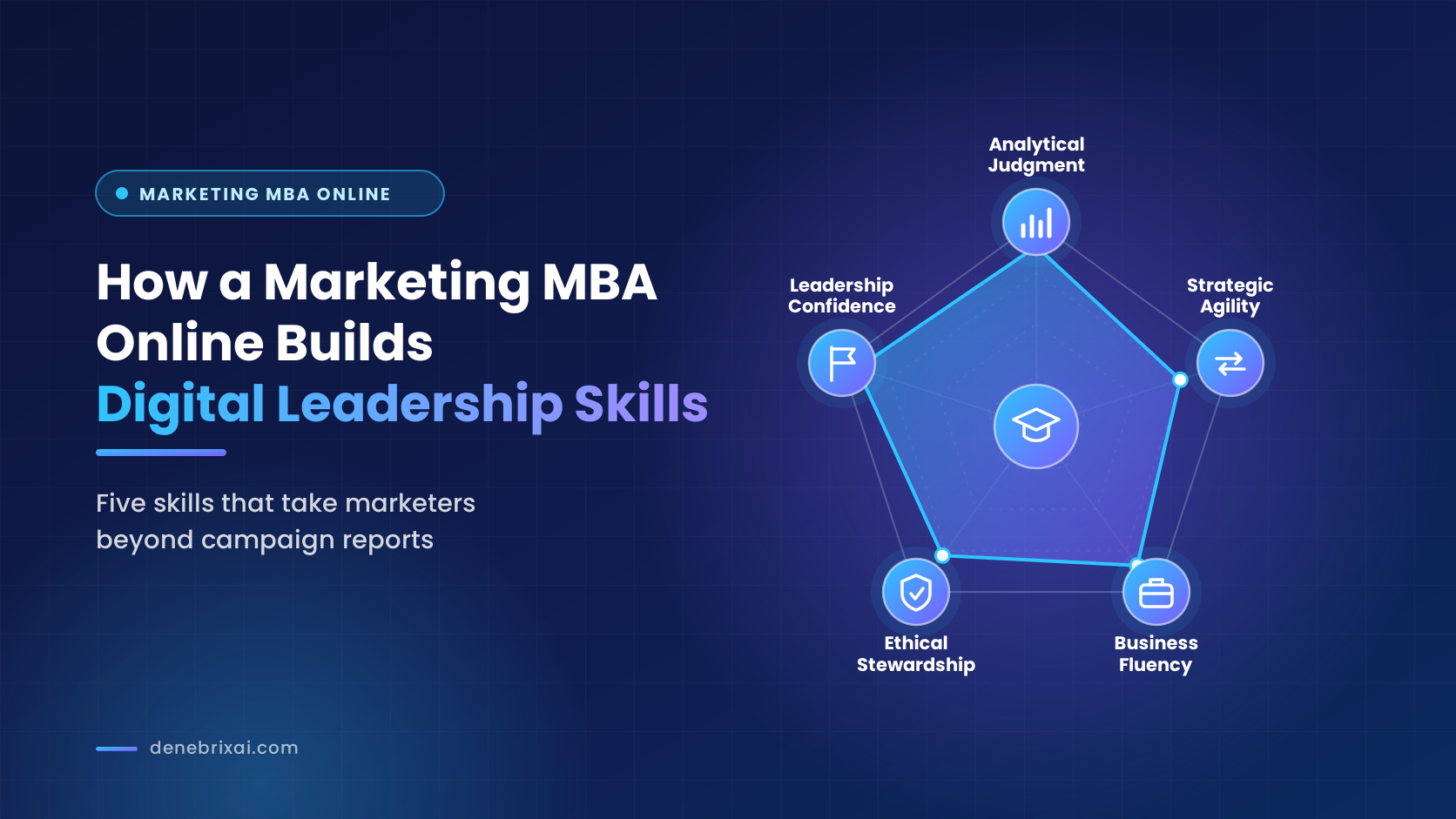
A marketing manager might spend Monday reviewing campaign results, Tuesday defending a budget request, and Wednesday dealing with a delayed launch. The work involves more than creating advertisements. Someone has to understand the numbers, coordinate the people involved, and decide what happens next.
As businesses rely on digital platforms and distributed teams, marketing decisions increasingly affect other departments. A marketing MBA online offers professionals a way to study those connections through finance, strategy, and management alongside marketing.
Analytical Foundations for Digital Judgment
Marketing teams collect information from websites, advertising platforms, and sales reports. The challenge is deciding which numbers matter and what they reveal about business performance.
Looking Beyond Campaign Metrics
Say a marketing team runs two campaigns over the same month. One brings in plenty of website visitors, while the other attracts fewer people but leads to more purchases. If the team only looks at traffic, the first campaign seems to be doing better. But that doesn’t tell the whole story.
Someone managing the budget would want to know what happened after those visitors arrived. Did they buy anything? How much did the company spend to reach them? Had the same pattern appeared in previous months?
Different metrics answer different questions:
- Conversion rate: The percentage of visitors who complete a desired action, such as a purchase.
- Customer acquisition cost: How much the company spends to acquire a new customer.
- Return on advertising spend: Revenue generated relative to advertising costs.
- Customer retention: Whether people continue buying after their first purchase.
These figures become more useful together. A campaign might attract fewer customers but generate stronger sales. Another might produce immediate results without bringing customers back. Managers must consider what the business is trying to achieve before deciding where to invest.
Turning Data Into Business Decisions
Interpreting reports is only part of the job. Leaders also need to explain their recommendations to people with different priorities. A marketing manager might recommend increasing spending on a successful campaign, while senior management asks whether the results are sustainable.
When you earn your marketing MBA online, you can study marketing alongside broader business subjects such as finance and management. This combination can help connect campaign decisions with an organization’s financial priorities.
The goal isn’t to become an expert in every analytics tool. It’s to recognize when a report is incomplete, question assumptions, and know what additional information might be needed. That judgment matters when several departments are competing for limited resources.
Strategic Agility in Virtual Environments
Digital projects often involve people who rarely work in the same room. Designers, analysts, sales representatives, and agencies may all contribute to a campaign on different schedules.
Coordinating Teams Across Locations
Remote communication can make ordinary workplace problems harder to resolve. Imagine a team preparing a campaign across three cities. The designer finishes the materials, but sales hasn’t confirmed the offer. Meanwhile, the advertising team is waiting for approval.
Everyone may be doing their job correctly. The problem is that nobody has a complete picture of the project’s progress. A manager needs to establish responsibilities and make sure people understand how their work connects. That might mean documenting decisions, agreeing on deadlines, or arranging a conversation when messages aren’t enough.
Online education can reinforce similar organizational habits. Students must manage coursework alongside other responsibilities, communicate with instructors, and track deadlines. When courses include collaborative assignments, students may also experience the challenges of coordinating work remotely. These experiences aren’t identical to managing employees, but they encourage clear communication and accountability.
Responding When Plans Change
Imagine a campaign that needs to launch a week earlier than planned. The designer is in another time zone, the budget approver is away, and the rest of the team is waiting for an answer.
Nobody necessarily made a mistake. People simply aren’t sure who can decide what happens next. A manager might rearrange deadlines, identify tasks that can continue, and explain the changes to everyone involved.
This flexibility is related to organizational agility: adjusting priorities and processes when circumstances change. For marketing leaders, it can mean abandoning a plan that looked perfectly reasonable on Monday. Being organized matters, but so does recognizing when the original plan no longer works.
Cross-Functional Business Fluency
Marketing recommendations affect budgets, staffing, technology systems, and other departments. Understanding those connections becomes increasingly important as professionals move into management.
Understanding the Financial Side of Marketing
A team might want to expand into a new digital channel because customers are spending more time there. But finance will ask different questions: How much will the campaign cost? When might it generate revenue? Which other projects could lose funding?
MBA programs combine specialized study with broader business education. At Lamar University, the online MBA in Marketing includes core subjects such as managerial accounting, financial management, and strategic management. These subjects offer different ways to evaluate a proposal before resources are committed.
Consider a company launching a product in another region. Marketing may focus on customer demand and advertising opportunities. Operations needs to know whether the business can handle additional orders. Finance wants to understand the investment and risks.
A manager who understands these concerns can present a more realistic proposal. Instead of treating campaign performance as an isolated goal, they can explain how the investment supports the company’s priorities.
Evaluating New Marketing Technologies
A new marketing platform might promise to automate work that currently takes several hours each week. Its subscription price looks reasonable, too. Then other departments start asking questions. Will it work with existing systems? Who will train employees? What happens if the company stops paying for it?
Those details can change the conversation. The tool might still be worth buying, but the manager needs to understand more than its features before recommending it.
The same applies to AI-powered lead generation. Automation may reduce time spent on prospecting, but managers still need to consider lead quality, implementation costs, and ongoing maintenance.
Before recommending new software, a manager should examine:
- Business value: Which problem will it solve, and how will results be measured?
- Implementation: What training, integrations, or support will be required?
- Ownership: Who will manage the platform and review its performance?
- Long-term fit: Will it still meet the team’s needs as priorities change?
These questions aren’t meant to discourage innovation. They help determine whether an investment makes sense beyond its initial appeal. A platform that saves time may be useful, but not if hidden costs outweigh the benefit.
Ethical Stewardship of Digital Channels
Customer information can make marketing more relevant. It also creates decisions about privacy, access, and trust that leaders need to consider before launching campaigns.
Protecting Customer Information
Think about a retailer that wants to use customers’ previous purchases to send more personalized offers. The team sees an opportunity to recommend useful products. But someone must first check what customers were told when their information was collected.
Who can access purchase histories? How long will the company keep them? What happens if someone asks for their details to be deleted? These questions affect how a campaign can be planned.
Privacy requirements vary with location, data type, and applicable law. Marketing managers should consult legal and technical specialists rather than assume an approach is permitted. Customer expectations matter, too. Even a legally permitted use of data may feel intrusive if people don’t understand it.
A campaign that produces strong short-term results could create longer-term problems if customers lose confidence in the business.
Making Responsible Technology Decisions
Automated systems can recommend actions much faster than people working manually. But their recommendations still need scrutiny.
Imagine an advertising platform directing most of a campaign’s budget toward one customer group. The team assumes that group offers the strongest opportunity. But what if the system relies on incomplete data or earlier campaigns that reached only a narrow audience?
Before increasing spending, managers should consider:
- Data quality: Is the information reliable and representative?
- Transparency: Can the team explain why the system recommends this audience?
- Oversight: Who checks the results and responds when something looks wrong?
An MBA doesn’t replace legal or technical expertise. Broader management study can, however, help professionals recognize when to involve other specialists. Sometimes the responsible decision is to change a campaign, even if its original approach appears likely to perform well.
Building the Confidence to Lead
Experience teaches marketers what can go wrong during a launch and why promising ideas sometimes fail at a budget meeting. Formal business study offers another perspective on those experiences, helping professionals understand how everyday marketing decisions connect to broader organizational goals.
A marketing MBA cannot replace years of working with customers and colleagues. It can help professionals connect marketing knowledge with financial analysis, strategic planning, and management principles.
That broader understanding becomes useful when responsibilities change. Instead of concentrating only on campaign performance, a manager may need to explain whether an investment deserves funding, how it affects other departments, or what should happen next. The tools will keep changing, but sound judgment and the ability to work with people remain valuable.
FAQ’s
1. How does an online marketing MBA build digital leadership skills?
It combines data-driven marketing strategy, cross-functional management and remote collaboration practice. This helps professionals lead teams and decisions in digital environments.
2. What core skills does an online marketing MBA develop?
It builds data-driven decision-making, strategic alignment with business goals and budgets, and change and risk management. You learn to use analytics and campaign insights instead of relying on intuition alone.
3. How does the online format reinforce leadership?
Working across time zones and digital tools mirrors leading distributed or hybrid teams. Case studies, simulations and self-directed study add practical experience.
4. What traits do digital leaders need?
HBS Online highlights agility, clear communication, empathy during transformation, external collaboration and calculated risk-taking. These help leaders guide teams through changing platforms and consumer behavior.

Comments are closed