
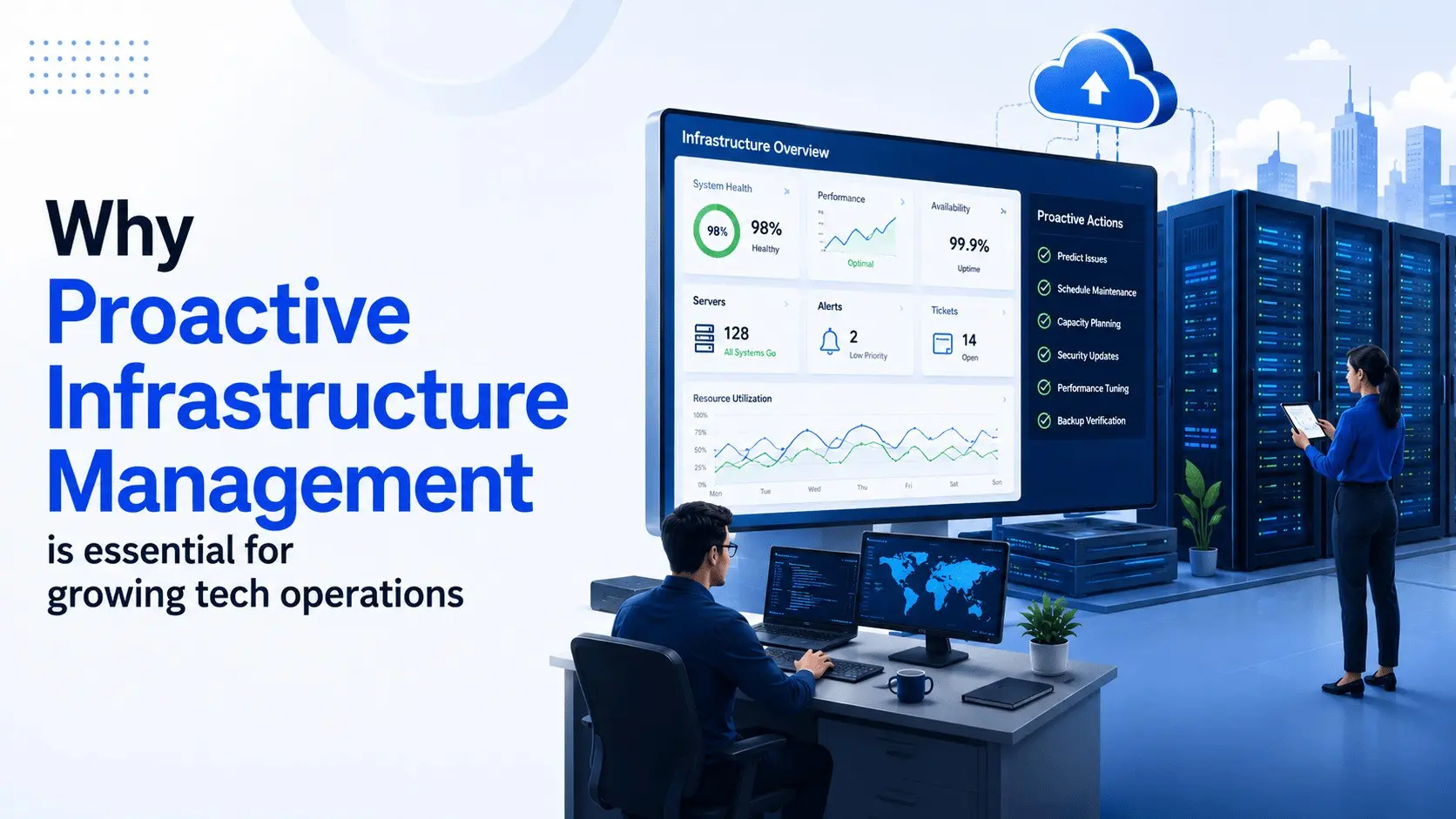
Most IT leaders now put proactive monitoring and managed services near the top of their list. The goal is simple: fewer security gaps, steadier networks, and less downtime.
Growth makes this harder. Once you’re running across cloud and hybrid setups, the day-to-day workload piles up fast. Every surprise outage eats into your engineering budget, delays releases, and leaves openings in your security that nobody spotted in time.
Watching your infrastructure before things break changes how your team works. Instead of jumping from one emergency to the next, they get a calmer, more predictable routine. Revenue stays protected, critical workflows keep running, and performance problems get fixed before customers ever notice them.
Why does reactive troubleshooting drain your technical resources?
If you only act once a server crashes or a customer complains, your engineers end up stuck in constant emergency patching. Each hour they spend tracing a broken connection is an hour taken from the roadmap work you actually hired them for, and the overhead keeps climbing.
Automated monitoring that runs all day changes that. You get clear telemetry and alerts that warn you early, so your team can catch slow database queries, memory leaks, and bandwidth limits well before any of them turn into customer-facing downtime.
How do you build strategic infrastructure oversight across regions?
Scaling technical infrastructure across distributed office branches and remote data hubs introduces heavy operational friction. As explained by the EIRE Systems team, working with seasoned specialists gives your team direct access to regional support frameworks, proactive network auditing, and rapid response capabilities. Your core systems stay protected from unexpected platform failures, and your own engineers get time back for building products. You also keep full visibility of every server rack, cloud instance, and internal gateway, without having to hire a crowd of local technicians.
What causes severe outages across hybrid and multi-cloud networks?
Cloud environments are full of dependencies, and they grow faster than anyone can track by hand. When several virtual environments talk to each other with no continuous monitoring, one small misconfiguration can spread quickly and take down a lot more than it should.
Research published by the Uptime Institute indicates that networking and IT failures cause nearly a quarter of all severe operational disruptions, with cloud configuration blunders driving the majority of these breakdowns. Real-time performance data and automated traffic checks across every environment are how you close those blind spots.
How can managed service partnerships protect long-term uptime?
Modern infrastructure needs someone watching around the clock, and few internal teams can keep that up on their own. A dedicated IT infrastructure partner fills the gap with steady oversight and routine preventive maintenance.
Key steps for evaluating external IT support
When you’re comparing managed infrastructure providers, check for these capabilities:
- Demand continuous telemetry: Make sure the provider monitors 24/7 and sends automated alerts across your whole hybrid stack.
- Verify architectural expertise: Pick a team with a real track record of fixing multi-cloud dependency problems and configuration errors.
- Require strict service benchmarks: Agree on recovery targets and guaranteed response times up front, so business continuity isn’t left to chance.
A resilient operation comes from planning ahead, not from scrambling during a crisis. Work with infrastructure experts and you protect your digital assets, scale without drama, and give users the steady performance they expect. Make proactive IT management your default approach, and your business stays flexible, secure, and ready for whatever growth comes next.
FAQs:
What is proactive IT monitoring?
Proactive IT monitoring tracks all servers, networks, and cloud systems to spot issues early, so teams can fix problems before they cause downtime or outages.
What is the difference between proactive and reactive IT support?
Reactive support fixes problems after they happen, while proactive support uses monitoring tools to catch issues early and prevent downtime before users notice.
How do managed IT services reduce downtime?
Managed IT services reduce downtime through 24/7 monitoring, automated alerts, routine maintenance, and incident response that stops small issues from growing.
What causes most IT outages in cloud environments?
Most cloud outages come from misconfigurations, networking failures, and untracked dependencies between systems, which is why continuous monitoring matters.
What should you look for in a managed IT service provider?
Look for a provider offering 24/7 monitoring, proven multi-cloud expertise, clear SLAs with guaranteed response and recovery times, and automated alerting.
How does proactive monitoring save money for IT teams?
Proactive monitoring cuts emergency fixes and unplanned downtime, so engineers focus on product work instead of firefighting, protecting revenue and budgets.
Which metrics should be monitored to prevent IT downtime?
Track CPU and memory usage, network bandwidth, latency, disk space, and slow database queries, since these early signals often appear before a system fails.

Comments are closed