

A big change is happening inside your phone and computer. Apple, Google, Samsung, and Microsoft are moving smart features directly onto your device. They are moving more AI tasks onto devices rather than relying solely on the cloud. This is why on-device AI news today is such a big deal. Running AI on your gadget makes it much faster. It keeps your data private and lets apps work without the internet.
This article is based on official updates from Google, Samsung, Qualcomm, and Microsoft. It also uses trusted news from CNET and Yahoo Finance to help you make sense of the latest on-device AI news.
We will show how this new edge AI turns your gadgets into powerful AI devices. You will also learn how Apple Intelligence is setting a new standard for what your phone and PC can do.
What Is On-Device AI?
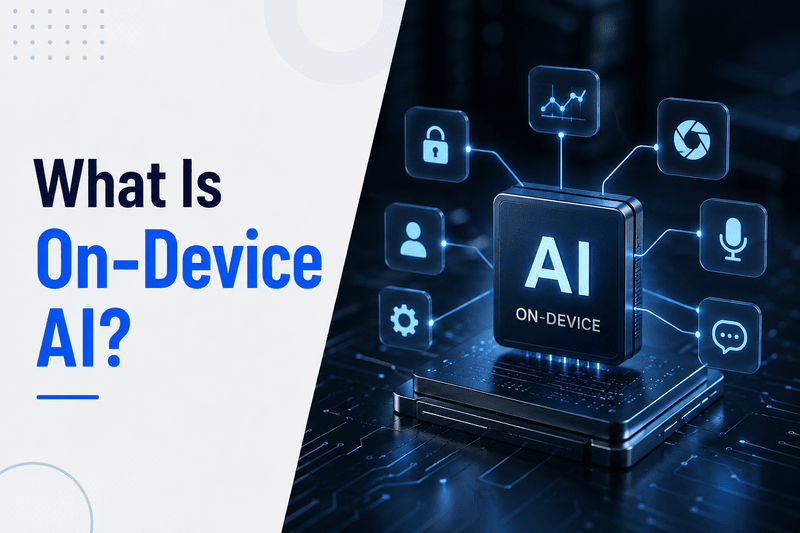
Most apps on your phone rely on a server miles away. On-device AI changes that. The smart software runs directly on your physical hardware. Tech circles call this edge AI. It just means your gadget processes files locally on the glass in front of you. Many AI tasks run on your device rather than on the web.
How Does On-Device AI Work?
Running things locally requires specific hardware on your smartphone or laptop. Chipmakers now bundle a separate, tiny processor onto the main board, usually called a Neural Processing Unit (NPU). This specialized engine is built to handle heavy math. It runs the AI model locally so you don’t have to send data back and forth over the web. That is why features like live voice translation or fast photo edits feel instant.
On-Device AI vs Cloud AI
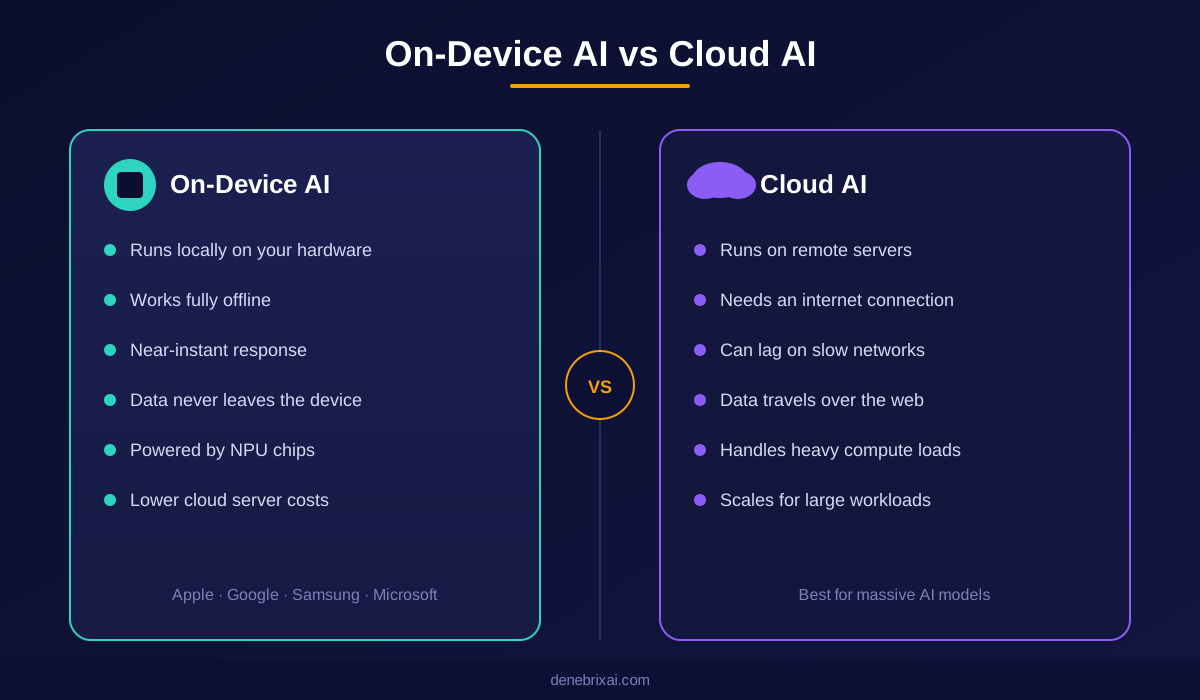
With on-device AI, your hardware does all the work right there. It keeps many AI tasks on your own device. and keeps your private files safe on your own machine.
Traditional cloud AI usually processes requests on remote servers. It has to send your data over the web to giant servers, so some cloud AI features stop working without an internet connection. Most companies today just mix the two. They use the local chip for quick tasks, but let the cloud take over when you need massive computer power.
Why Is On-Device AI Gaining Momentum?
Waiting for a distant server to process your files causes annoying lag and exposes your personal information to security risks. Running edge AI fixes this issue by handling your data directly on your physical hardware. Because the computing happens locally, your applications respond instantly with near-zero delay. This shift to local processing keeps your sensitive information secure on your own machine, reducing the threat of online data breaches.
Staying smart offline is the big trick here. Your phone or laptop can handle heavy computing tasks because hardware manufacturers now pack specialized Neural Processing Units (NPUs) directly onto the motherboard. These extra engines process large datasets right where you are. Rather than constantly bouncing data back and forth over the internet just to fix a photo or translate speech, your gadget does it locally. This cuts down your reliance on a steady signal while saving a lot of energy for large, overworked cloud data hubs.
On-Device AI News Today: Latest Developments
On-device AI news today is moving fast. Big companies like Apple, Google, Samsung, Microsoft, and Qualcomm are putting smart new features directly onto phones and laptops. These latest updates show that local AI processing is now a standard feature rather than just an experiment. This big shift changes how our everyday gadgets run smart tools without constantly needing to connect to the internet.
Latest On-Device AI Announcements at a Glance (2026)
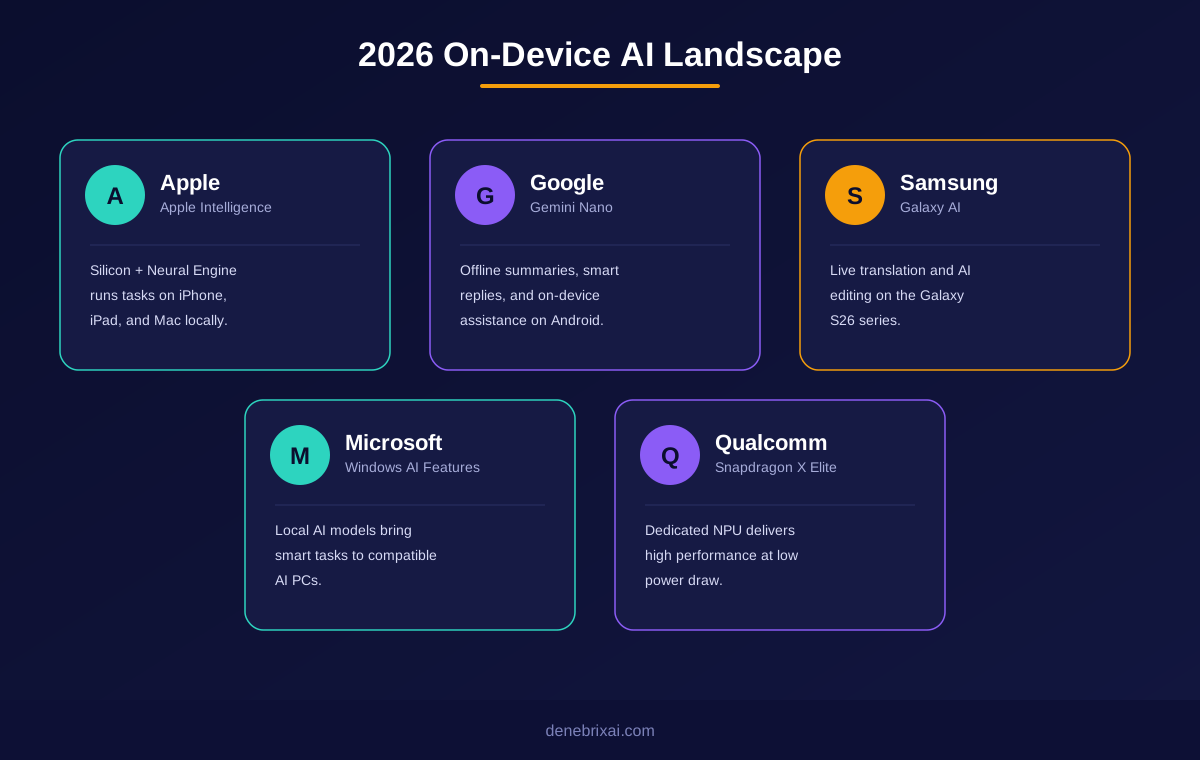
| Company | Latest Update | Device | On-Device AI Feature | Why It Matters |
| Apple | Expanded Apple Intelligence | iPhone, iPad, Mac | Apple Silicon + Neural Engine | Faster AI processing with more tasks handled locally. |
| Gemini Nano rollout | Android phones | Local AI features | Offline summaries, smart replies, and on-device assistance. | |
| Samsung | Galaxy AI expansion | Galaxy S26 series | Live translation, AI editing | Better privacy and faster AI experiences. |
| Microsoft | New Windows AI features | AI PCs | Local AI models | More AI tasks processed directly on compatible PCs. |
| Qualcomm | Snapdragon X Elite platform | AI PCs, mobile devices | Dedicated NPU | Higher AI performance with lower power consumption. |
Apple On-Device AI News
Apple is making big moves with its new system called Apple Intelligence. Apple announced that these updates are built to run directly on the company’s own custom chips, known as Apple Silicon. Because the system runs tasks directly on your device rather than sending them to a remote web server, compatible iPhones, iPads, and Macs can process your requests almost instantly.
This entire setup relies on Apple’s built-in Neural Engine. This special chip keeps your personal information private by processing your data locally rather than sharing it with external databases. By keeping its software and hardware tightly connected, Apple has built a very private system. This focus on privacy is a goal Google is also pursuing with its Android software.
Google Expands Gemini AI
Google is keeping up by putting its fast Gemini Nano AI model right into the Android Developers platform. This change brings local AI processing to many new Android phones. Since the AI runs directly on the phone, users can quickly summarize text, type smart replies, and edit photos without needing a web connection. This on-device approach helps Android phones provide quick help on the go, much like what Samsung is doing with its own devices.
Samsung Advances Galaxy AI
Samsung is using these local hardware updates to improve its Galaxy AI features. Its newest phones do the heavy lifting right on the device, giving you instant results while keeping your personal data safe. Samsung’s own semiconductor designs allow its phone chips to translate live calls, organize voice notes, and clean up photos with zero lag. Because the work is done on the device, your private files never have to leave your phone. While phone makers are leading the way in mobile devices, Microsoft and Qualcomm are using the same local technology to transform the laptop market.
Microsoft and Qualcomm Push AI PCs
To bring these fast, local benefits to computer users, Microsoft AI is building new Windows software designed specifically for advanced AI PCs. These modern computers run AI models right on your desk. This setup lets you use live video translation, search your files instantly, and use smart office assistants without any internet lag.
This new Windows software works hand in hand with Qualcomm hardware, especially the Snapdragon X Elite chip. This chip has a powerful NPU built to run heavy AI tasks directly on your laptop. This close pairing of smart software and local hardware proves that on-device AI is no longer just for phones but is the new standard for all personal computers.
What These On-Device AI Updates Mean for Users and Businesses
Boosting Daily Flow and Privacy
For everyday users, these updates make your phone and laptop much faster. They also keep your private life private. Since your device does the heavy lifting itself, you do not need the internet to get things done. You can translate voices while traveling, edit your vacation photos, or type up notes without waiting on a slow signal. Keeping your files on your actual hardware protects your AI privacy because your private data stays off the web. This makes on-device AI super fast, safe, and ready to use anywhere.
Securing Data and Lowering Overhead
For businesses, using enterprise AI is a safe way to use new tools without breaking the bank. Places like hospitals and banks have to protect sensitive files. Running AI models locally keeps that private data safe inside their own buildings, which greatly improves enterprise security. This level of control is a core principle behind AI contextual governance for business evolution, which allows companies to make highly secure, situational decisions without rigid compliance blocks. Plus, doing the work on your own machine saves companies from paying huge cloud storage bills. It also helps software developers. They can build apps that work perfectly offline without needing giant, expensive web servers to keep them running.
What’s Next for On-Device AI?
The next step for on-device AI is all about making smart models much smaller. Right now, major phone and laptop brands are building tiny AI models that can run directly on your daily gadgets. Qualcomm recently showed how its newest mobile and PC chips are made to run these small models locally. This shift means your personal devices can soon handle tough tasks on their own. It will make your apps run much faster while keeping your private files safer.
We are also moving toward smart AI agents that can do daily tasks for you, like planning a trip or sorting your calendar. Companies looking to stay ahead of this wave are already utilizing advanced generative AI development services to deploy custom, goal-driven agents trained securely on their internal data. Perplexity CEO Aravind Srinivas recently pointed out that running AI on your own device is the future. He explained that putting smart models right on your device’s chip will let the AI learn your habits offline. This means we don’t need to send all our data to huge web servers. This local setup will help businesses use smart new tools without worrying about leaking private company information online.
Conclusion
The move to on-device AI is changing how we use our everyday gadgets. Companies like Apple, Google, Samsung, Microsoft, and Qualcomm are driving this change. They are building better hardware and software that work together right on our devices. Following on-device AI news helps you stay up to date with these fast changes, especially since on-device AI news today shows new updates for phones and PCs. As this technology improves, running AI locally will likely become a standard feature on all our smartphones and laptops.
FAQs
What is on-device AI?
On-device AI means running smart software models directly on your phone or laptop. Your gadget processes data locally, keeping your files private and letting your apps work offline.
What is the latest on-device AI news today?
The latest on-device AI news today highlights major updates from Apple, Google, and Samsung. Together with Microsoft and Qualcomm, they are putting fast, local intelligence models directly on new computers.
What is Apple on-device AI?
According to Apple on-device AI news, Apple Intelligence runs tasks locally. The system uses Apple Silicon and the Neural Engine, making it a hot topic in Apple AI on-device news.
How is on-device AI different from cloud AI?
While cloud AI sends your private files to distant web servers for processing, on-device AI runs tasks directly on your physical hardware. This makes local tools faster and safer.

Comments are closed