

Ask around at almost any agency and you’ll hear some version of the same story. AI has crept into project planning, campaign execution, reporting, QA, client comms, the whole grind of workflow admin. It didn’t happen overnight, and for a while it just looked like a handy way to shave a few hours off busywork. Somewhere along the line, though, it turned into something else entirely, a real lever on how agencies compete and grow, not just a nice to have productivity trick.
That’s the opportunity. It’s also, frankly, a headache for a lot of leadership teams.
Clients want it all now: faster turnarounds, sharper strategy, results they can point to, and experiences that don’t feel mass produced. Meanwhile agencies are the ones footing the bill for that ambition, rising costs, a talent pool that keeps getting harder to fish from, and an ever expanding list of services they’re supposed to nail every time.
Mavlers Agency’s take on this is pretty blunt: the agencies that come out ahead over the next decade won’t necessarily be the biggest ones. They’ll be the ones running the smartest shop. Not more people. Smarter operating models. AI, done right, isn’t there to replace the specialists doing the thinking, it’s there to clear out the friction so those people can spend their hours on problems that actually need a human brain. Fewer heads isn’t the point. Getting more out of the people you’ve already got, that’s the point.
Scaling used to just mean hiring. That math doesn’t hold anymore.
For a long time, agency growth followed a script nobody questioned: win more clients, hire more staff, add capacity, repeat. And it worked, until it didn’t. Bigger teams meant longer onboarding, costs that crept up quietly, delivery quality that got shakier the more the org chart sprawled, and a management layer that just kept getting heavier.
AI gives agencies a way out of that loop. Instead of scaling mostly by adding headcount, they can scale by cutting the drag, automating the repetitive grind, speeding up the knowledge work, tightening how teams actually collaborate. Mavlers Agency works across digital marketing, web development, ecommerce, and creative services, and one pattern keeps showing up: the AI projects that actually pay off aren’t the ones swapping out specialists. They’re the ones that free specialists up to do the work only they can do.
This goes well beyond automation
AI has worked its way into nearly every corner of agency operations by now, research and competitive analysis, AI-powered SEO auditing, campaign monitoring, marketing reporting, workflow automation, project documentation, code assistance, design ideation, data analysis, internal knowledge management. The list keeps growing.
Strip enough of that repetitive load off a team, and what’s left over isn’t just spare time. It’s capacity. Real capacity, the kind that shows up as better service, shorter delivery timelines, sharper client conversations, and room to chase new growth without piling on more operational complexity.
Here’s a pattern Mavlers Agency keeps running into: the agencies squeezing the most value out of AI aren’t trying to automate everything under the sun. They’re picky about it. They automate the right things and leave the rest alone.
The Mavlers AI Scale Framework
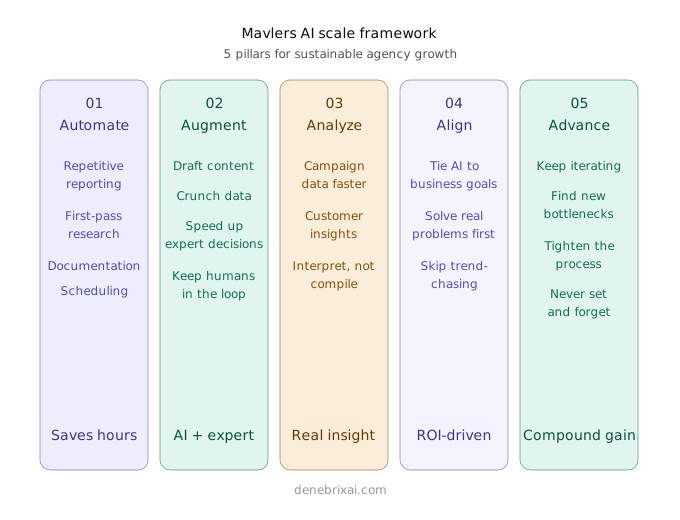
Every agency eventually hits the same wall, where do we even begin? Mavlers Agency’s answer isn’t “automate more, faster.” It comes down to five pillars.
Automate the repetitive work. Reporting, documentation, scheduling, first pass research, this is where a specialist’s time just quietly bleeds away. Hand that off, and you free up hours for the strategic stuff that actually needs a person, with the side benefit of more consistent delivery.
Augment, don’t replace. Drafting content, crunching data, spotting where a campaign could optimize, AI’s job here is to speed up the expert’s decision, not stand in for it. Keep humans in the loop and you keep the creativity and judgment clients are paying for in the first place.
Analyze faster. Agencies are drowning in campaign and customer data these days. The real win isn’t AI writing the report for you, it’s getting your team’s hours back so they can spend them interpreting what the numbers actually mean, instead of compiling them.
Tie AI to actual business goals. One of the more common mistakes agencies make is adopting a tool just because it exists. Start with the business problem. Agencies that link AI spend to real priorities tend to see far more value than the ones chasing whatever’s trending this month.
Keep improving, don’t set and forget. AI isn’t a one off rollout. Its value builds over time, teams learn where the bottlenecks sit, which tasks are worth automating next, how to tighten the process. Do this consistently and the whole organization gets sharper without the quality or client experience taking a hit.
AI amplifies strategy. It doesn’t replace it.
Here’s what hasn’t budged, no matter how good these models get: clients don’t hire an agency to churn out content. They hire an agency to solve a business problem. That still comes down to strategic thinking, market instinct, creative judgment, an actual read on customer psychology, and the nerve to make a hard call when it counts. No model does that for you.
AI can throw keywords at you all day. It has no real grasp of what makes a brand’s competitive position actually work. It’ll summarize a mountain of analytics in seconds flat, but it can’t replace the judgment it takes to read where a market’s heading, or sit across from a client and talk them through a decision that genuinely matters.
Mavlers Agency has watched this play out over and over: the strongest results come from agencies where AI supports the experts, not ones where the experts are expected to just go along with whatever the AI spits out. Speed comes from the technology. Value still comes from people.
What an AI-augmented agency actually looks like day to day
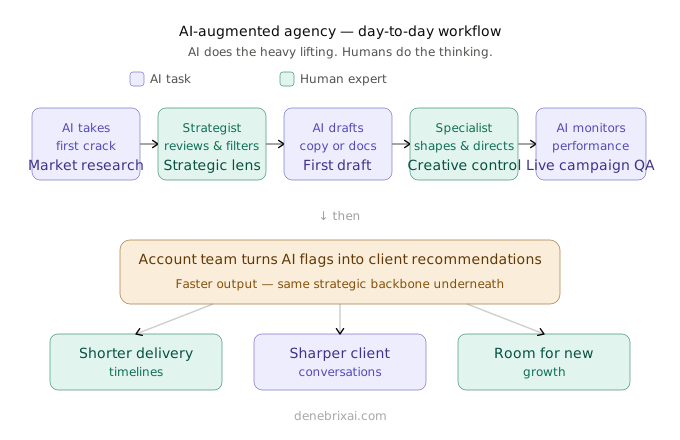
This was never really a “humans vs. machines” question. The agencies pulling ahead are the ones blending both well. In practice, a typical workflow might run something like this:
AI takes the first crack at market and competitor research. Strategists check that work and pull out what’s actually useful. AI drafts initial copy or technical docs. Specialists then take that draft and shape it, messaging, creative direction, the actual execution. AI keeps watch on campaign performance and flags anything that looks off. The account team turns those flags into recommendations a client can act on with confidence.
Faster output, same strategic backbone underneath it.
Turning Static Images Into Videos: How Agencies Are Scaling Visual Content With AI
For agencies, visual storytelling often starts with static creative assets – product images, campaign designs, mood boards, and brand visuals. Turning these assets into engaging video content traditionally requires additional production resources, making it difficult to create enough variations for fast-moving campaigns.
AI-powered video tools are changing this workflow by helping creative teams extend the value of existing assets and transform early-stage concepts into polished video experiences. Instead of rebuilding every video from scratch, agencies can now bring static visuals to life and create new content formats while maintaining the original creative direction.
Using tools that help teams turn images to videos with AI, agencies can bring static visuals, product images, and campaign assets to life by transforming them into engaging video content. This helps creative teams produce more content variations for social media, marketing campaigns, and client presentations while reducing the time and resources typically required for traditional video production.
Doing this responsibly isn’t optional
As these tools get more capable, the questions around them get heavier too, data privacy, IP, how reliable the outputs actually are, transparency, governance. None of that is a nice to have anymore. Agencies need clear internal policy covering:
- Human review before anything reaches a client
- Responsible handling of client data
- QA built specifically for AI assisted work
- Documentation of where AI touched a project and how
- Ongoing training as the tools keep shifting under everyone’s feet
Mavlers Agency’s view on this is pretty simple: responsible AI was never about automating as much as possible. It’s about using it where it genuinely helps, while making sure every deliverable still carries real human fingerprints, expertise, oversight, an actual quality bar.
From productivity tool to competitive edge
It’s tempting to think of AI purely as an efficiency play, and sure, the time savings are real. But that’s only half the story. AI also gives agencies more consistent operations, shorter onboarding, tighter internal collaboration, and the ability to respond to client needs without the usual lag.
That adds up to more than just speed. It adds up to competitiveness. Mavlers Agency has noticed that agencies weaving AI into well built workflows tend to be better positioned to scale than the ones still leaning almost entirely on hiring. AI isn’t just another software line item, for the agencies doing it well, it’s become part of the actual operating model, feeding sharper decisions, more agility, and better outcomes for clients.
Getting ready for what comes next
New models, autonomous agents, multimodal tools, workflow automation that keeps getting smarter, none of this is slowing down. But the real challenge for agencies was never keeping pace with every new release. It’s building an operating model flexible enough to adapt as the ground keeps shifting.
The agencies leading five years from now probably won’t be the ones with the biggest tool stack. They’ll be the ones with repeatable processes, genuinely skilled people, and a clear eyed sense of where AI creates measurable value and where it doesn’t. Sustainable AI adoption, as Mavlers Agency sees it, was never really about replacing people. It’s about letting people operate at a higher level.
Five things worth doing if you’re leading an agency right now

Start with the business objective, not the tool. Know what outcome you’re actually chasing, faster delivery, better efficiency, stronger campaign results, less busywork, before you go shopping for AI solutions. Measure success against that outcome, not against how many tools you’ve bolted on.
Build AI literacy across the whole team, not just the technical folks. Strategists, account managers, designers, developers, marketers, leadership, everyone benefits from actually understanding what these tools can and can’t do. The agencies that spread this knowledge widely tend to spot real opportunities faster than the ones keeping it siloed.
Keep a human in the loop, always. Every AI generated output needs experienced eyes on it before a client ever sees it. Strategic thinking, creative direction, the ethical calls, that’s still fundamentally human work, full stop. Automation plus expert judgment beats either one running solo.
Build workflows that can actually scale. Standardized documentation, clear approval chains, solid governance, consistent QA, this is what lets an agency grow its AI use with confidence instead of chaos. It’s the workflow that creates the lasting advantage, not any one tool sitting inside it.
Keep measuring and keep adjusting. This isn’t a rollout you do once and walk away from. Regularly check how automation is actually affecting productivity, turnaround times, client satisfaction, and margins, then adjust. That’s how the value keeps compounding instead of flatlining after month two.
Strategic thinking is what actually gets rewarded here
AI is lowering the barrier to just getting things done. Work that used to eat up hours now takes minutes. Which means the competitive edge is shifting, it’s no longer just about who can move fastest. It’s about who can pair that speed with real strategic insight, creativity, solid governance, and a client experience that feels genuinely thought through rather than assembly lined.
Clients are still going to pick the agency that understands their industry, tackles the hard problems, and gives advice they can actually trust, not the one that’s simply quickest at running a prompt. Technology speeds up execution. Relationships are still built on expertise and trust, and that part hasn’t changed.
Final thoughts
AI is reshaping how agencies operate, that much is obvious at this point. But its real impact goes well beyond productivity numbers on a dashboard. The organizations pairing automation with experienced people, disciplined process, and a genuine habit of continuous learning are the ones set up to scale in a market that keeps getting more crowded.
At Mavlers Agency, AI gets treated as an accelerator, not a stand in for human expertise. The agencies that come out ahead won’t be the ones with the biggest teams or the longest list of tools. They’ll be the ones that build a genuinely intelligent operating model, one where technology extends what people can do, strategy stays firmly in the driver’s seat, and clients keep getting more out of the relationship than they put in.
FAQs:
Can AI replace the need to hire more staff at a digital agency?
No, AI removes repetitive drag like reporting and research, but strategic thinking, client judgment, and creative direction still need humans. The goal is getting more out of existing specialists, not shrinking the team.
What’s the biggest mistake agencies make when adopting AI?
Picking a tool before defining the problem. Start with a specific bottleneck first, then find the right AI for it not the other way around.
How do you maintain quality when AI touches client deliverables?
Mandatory human review before anything reaches the client, plus QA processes built specifically for AI-assisted work. Governance is infrastructure, not an afterthought.
How is AI changing what clients expect from their agency?
Clients now expect faster turnarounds and real-time performance visibility but trust and strategic depth still win the relationship. Speed alone doesn’t close deals anymore.
What separates agencies that scale well with AI from those that don’t?
Process discipline over tool count repeatable workflows, clear oversight, and continuous auditing of what’s actually delivering value. The longest tool stack rarely wins.

Comments are closed