
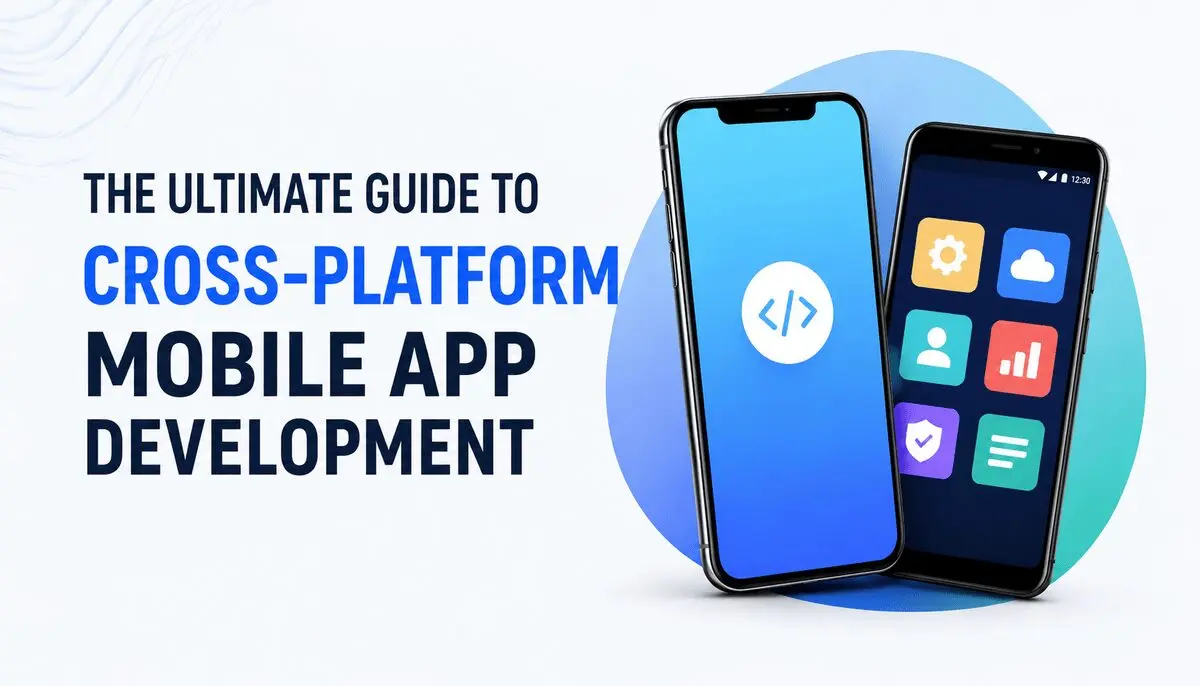
Mobile apps play a key role in modern business today. They let companies connect with customers, improve processes, and grow their online presence. Building separate apps for iOS and Android is time-consuming. It also requires significant time and effort to keep them up to date. Many developers are switching to cross platform mobile programming to tackle this challenge. This method uses a single app design that runs on multiple platforms.
Using tools such as .NET MAUI, Flutter, and React Native, businesses cut their costs and still give users the same experience on different devices. Cross platform app development has made major improvements. It now offers speed, adaptability, and features that closely match those of native apps, in terms of quality and performance.
This guide explains cross platform mobile programming. It covers how it works, its key benefits, and the challenges it presents. It highlights the top frameworks developers use today and shares tips to build great mobile apps. This guide is for developers, business owners, and tech fans. It shows how cross platform development can improve your mobile plans. It can also help you grow your business.
Cross Platform Mobile Development Market Statistics
Growth in cross platform mobile app development is due to more developers adopting it. There is also a greater need for apps on various mobile platforms.
According to Statista App Store Data, the Google Play Store hosts more than 1.8 million apps, while the Apple App Store contains over 1.6 million apps. Mobile ecosystems are growing fast. Startups want quick, effective ways to develop apps across multiple platforms.
The Stack Overflow Developer Survey 2024 found that 9.4% of professional developers use Flutter. This makes it one of the most popular cross platform frameworks today. On top of that, Flutter boasts over 170,000 GitHub stars as an indicator of the vast open-source community supporting this framework.
The JetBrains Kotlin Multiplatform Report shows that over 50% of Kotlin developers are using or exploring Kotlin Multiplatform. They are interested in shared mobile app development projects. This growth shows that startups and enterprise teams need scalable mobile architectures. They want these to work on multiple platforms.
What Is Cross Platform Mobile Programming?
Cross platform mobile programming enables developers to create apps for multiple operating systems. They use one codebase to do this. Teams reuse most of the business logic, backend communication, and interface structure across Android and iOS. This way, they avoid building separate apps for each platform. Keeping that shared codebase organized is easier with patterns like Feature Sliced Design.
This model helps startups. It reduces repeated engineering work. It speeds up releases. It also makes maintenance easier. Modern mobile development platforms give better access to native APIs. They also provide smoother UI rendering. Plus, they improve performance. These platforms are better than older hybrid technologies.
Why Do Startups Prefer Cross Platform Mobile Development?
One of the biggest reasons startups choose cross platform mobile development is speed. Building two separate native apps needs bigger teams. It also takes more time and requires extra maintenance. Shared architectures simplify the process.
Cost efficiency is another major advantage. Early-stage companies usually have tight budgets. This makes it hard for them to keep separate teams for Android and iOS. Cross platform app development helps small teams support many platforms at once. This way, they can still provide modern mobile experiences.
Native vs Hybrid vs PWA vs Cross Platform Development
There are ways to develop mobile apps; all these methods support both technical and business goals.
Native App Development: The app is built for a single operating system, such as Android or iOS. Developers use programming languages like Kotlin for Android and Swift for iOS. The method provides high performance and works in coordination with the device’s hardware.
Hybrid Application: Hybrid apps are web applications that run in a shell on a mobile phone.
Progressive Web Application (PWA): A type of application that runs in a mobile browser.
Cross Platform Mobile Programming: This approach falls between native and hybrid. It lets us share code across different platforms. This keeps our performance and user interface strong.
Native vs Cross Platform Development Comparison
| Feature | Native Development | Cross Platform Development |
| Codebase | Separate for Android and iOS | Shared across platforms |
| Development Cost | Higher | Lower |
| Time to Market | Slower | Faster |
| Maintenance | More complex | Easier |
| Team Size | Usually larger | Usually smaller |
| Performance | Maximum native performance | Near-native performance |
| Best For | Gaming and graphics-heavy apps | Startups and business apps |
| Scalability | High | High with proper architecture |
Startup Developer Cost Comparison
Being cost-effective in engineering is another advantage of developing applications across multiple platforms. The company will not be required to hire separate developers for different operating systems, but rather a smaller group that will handle both platforms.
| Developer Type | Average Hourly Rate | Team Requirement |
| Flutter Developer | $50–90/hr | Single cross platform team |
| React Native Developer | $50–100/hr | Single cross platform team |
| Native Android Developer | $70–140/hr | Separate Android team |
| Native iOS Developer | $80–160/hr | Separate the iOS team |
| Combined Native Mobile Team | $120–180+/hr | Multiple specialized teams |
For startups focused on MVP development, cross platform mobile programming often provides a much lower entry cost while still supporting scalable product architecture.
Top Programming Frameworks for App Development
Selecting a framework shapes a startup’s work. It has an effect on hiring and scalability. It also has an impact on UI quality, how easy it is to maintain, and how fast releases happen.
The frameworks below dominate the cross platform mobile app development ecosystem.
1. Flutter
Flutter, created by Google, uses the Dart language. It has its own rendering engine. This lets developers build custom interfaces that look consistent on all devices.
Flutter is popular with startups. It offers hot reloads, fast animations, and strong support. Verified products built with Flutter include Google Pay and eBay Motors.
Key Features
- Hot reload for rapid UI testing
- High-performance rendering engine
- Strong animation and custom UI support
2. React Native

Meta created React Native to let developers make mobile apps using JavaScript and React. It works by using native interfaces to run these apps.
React Native is still used because it has a strong community and a rich ecosystem. Big companies such as Discord and Shopify rely on React Native in their live systems.
Key Features
- JavaScript and React-based architecture
- Large open-source plugin ecosystem
- Reusable UI components
3. Kotlin Multiplatform
Built by JetBrains, Kotlin Multiplatform focuses on sharing business logic rather than enforcing fully shared interface layers.
Verified companies using Kotlin Multiplatform include Cash App and McDonald’s.
Key Features
- Shared business logic across platforms
- Native UI flexibility
- Strong Android ecosystem integration
4. .NET MAUI
.NET MAUI stands for Multi-platform App UI. It is a new cross platform toolkit created by Microsoft to develop mobile and desktop applications natively from a single codebase. This toolkit helps developers create apps for Android, iOS, Windows, and MacOS with C# and XAML.
Using .NET MAUI, developers can simplify app creation by sharing user interfaces and business logic across multiple platforms. It is an update from the Xamarin Forms toolkit.
Key Features
- Unified .NET ecosystem
- Android, iOS, macOS, and Windows support
- Native performance optimization
5. NativeScript
NativeScript allows developers to build mobile apps using JavaScript or TypeScript. It gives direct access to native APIs, so there’s no need for a web view. This method works with Angular, Vue, and JavaScript. It appeals to startups that want to focus on their frontend.
Key Features
- Direct native API access
- Angular and Vue integration
- Native UI rendering without web views
6. Uno Platform
Uno Platform is an open-source tool. It lets you create apps for many platforms using C# and XAML. The framework has three main features. First, it ensures UI consistency. Second, it offers enterprise-level scalability. Third, it supports deployment on many devices. Additionally, Uno Platform allows integration into the Windows ecosystem. Startups creating enterprise software, SaaS dashboards, or cross-device apps will benefit most.
Key Features
- Single-codebase multi-device deployment
- Strong Microsoft ecosystem integration
- Shared UI architecture across platforms
7. Ionic
Ionic creates mobile apps using web tools such as HTML, CSS, and JavaScript. It relies on a web-based rendering system to power these apps. This approach makes it different from frameworks like Flutter or React Native. Ionic works with Angular, React, Vue, and CT frameworks. This support allows web developers to build more mobile apps.
Key Features
- Web technology-based architecture
- Progressive Web App support
- Large frontend framework compatibility
How to Choose the Right Framework for Your Startup?
The right framework depends heavily on your startup’s technical goals, team experience, and long-term scaling plans.
If your development team already works with React and JavaScript, React Native may offer an onboarding process. If customization and animation quality matter more, Flutter is often the stronger option.
| Startup Requirement | Recommended Framework |
| Fast MVP launch | Flutter or React Native |
| Existing React team | React Native |
| Existing Microsoft stack | .NET MAUI |
| Native UI flexibility | Kotlin Multiplatform |
| Web-focused development team | Ionic |
| Enterprise scalability | Uno Platform |
Long-term ecosystem support is equally important. Frameworks backed by large developer communities and stable companies usually provide better ecosystems, higher-quality documentation, and maintenance support.
Real Startup Case Studies
Reflectly and Flutter
Reflectly created a visually appealing application for journaling with a custom animation feature using Flutter. With Flutter, Reflectly ensured design consistency across its apps on both Android and iOS.
Brigad and React Native
Brigad adopted React Native to streamline development across mobile platforms while scaling its staffing marketplace application. The shared JavaScript ecosystem helped the company reduce duplicated engineering work and improve release speed.
MVP Development Checklist for Startups
Most startup applications fail because teams spend too much time building unnecessary features before validating product demand.
1. Choose the Right Tech Stack
Select a framework based on your team’s experience, UI requirements, and product timeline.
2. Define Core Features Only
Focus only on features directly connected to validating the business idea.
3. Set Up CI/CD Pipelines
Use automation tools like GitHub Actions or Jenkins to simplify testing and deployment.
4. Launch a Closed Beta
Test the application with a limited group of users before the public release.
5. Analyze Feedback and Scale Gradually
Use analytics, crash monitoring, and retention tracking before aggressively expanding features.
AI and Cross Platform Mobile Programming
Artificial intelligence is becoming a major part of modern mobile applications. Startups are adding recommendation systems to their apps. They also use AI chatbots, voice assistants, image recognition, and predictive analytics. This is happening more and more in mobile products.
Frameworks like Flutter and React Native now let you integrate AI with tools such as TensorFlow Lite, Core ML, and ML Kit.
Developers using Flutter often rely on the tflite_flutter plugin. This tool lets them run machine learning models on mobile devices. These integrations enable startups to build AI-enabled mobile products. They don’t need to manage separate machine learning pipelines for Android and iOS.
Challenges of Cross Platform Mobile Development
Despite major improvements, cross platform mobile programming still comes with technical limitations that startups should understand before selecting a framework.
One common challenge is the gap in the plugin ecosystem. Some third-party plugins fail to support the latest operating system updates immediately, forcing developers to build additional native patches manually. Testing on real devices and OS versions early, as covered in software testing basics, helps catch these issues before release.
Debugging also becomes more complicated because developers work across abstraction layers between frameworks and operating systems. Platform-specific bugs may behave differently on Android and iOS, which increases troubleshooting difficulty during production releases.
UI consistency can become another issue. Android and iOS follow different navigation patterns, animations, and interface behaviors. Maintaining consistent experiences across platforms while still respecting native design expectations often requires additional customization work.
App store submission requirements may also create problems. Some frameworks need extra setup specific to the platform, like settings to grant permissions or use hardware. They may need to update how they manage notifications or background tasks. This is important before apps can pass the review process on the Apple App Store or Google Play.
Conclusion:
The future of mobile development is all about productivity, scalability, and speed. These factors make cross platform programming a great option for many organizations. Native development is useful for special apps. But modern cross platform frameworks are now mature. They help developers create powerful, feature-rich apps. Plus, they eliminate the need for separate codebases.
Success relies on choosing the right framework. It also requires understanding project needs and following best development practices. Mobile technology is always changing. Cross platform solutions will be more important for businesses. They help reach users on different devices and operating systems. Developers can now use the right tools and strategies. This helps them build mobile apps that stay competitive, adaptable, and ready for future demands.
Frequently Asked Questions (FAQs)
What is cross platform mobile programming?
Cross Platform Mobile programming is a development approach in which developers write a single codebase for an application that can run on multiple operating systems, like Android and iOS.
Is cross platform app development good for startups?
Yes. Cross platform app development helps startups cut costs, release products faster, and simplify the maintenance of long-term applications.
Which framework is best for cross platform mobile app development?
Popular options include Flutter, React Native, Kotlin Multiplatform, and .NET MAUI.
What is the difference between hybrid and cross platform development?
Hybrid apps are built using web technologies wrapped inside native containers. Cross platform frameworks tend to offer stronger native rendering and performance.
Can AI be integrated into cross platform mobile apps?
Yes. You can connect to AI APIs, cloud services, and ML systems with modern cross platform frameworks.
Does cross platform mobile development affect performance?
Most business applications today can be performance-optimized with modern frameworks to achieve native-like performance, but highly graphics-intensive applications may still use native development for performance reasons.

Comments are closed